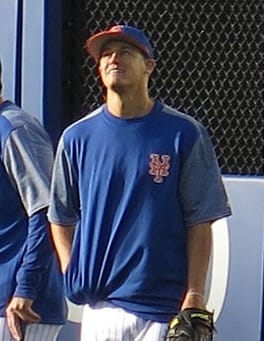
Photo: D. Benjamin Miller / CC0 (source: Wikimedia Commons)
My Take
Paul Sewald is one of baseball's best reclamation stories, a pitcher who struggled with the Mets and looked like a fringe arm before reinventing himself into a lockdown closer in Seattle. I love that kind of arc, the player who tweaks his approach, leans into a nasty slider and rising fastball, and suddenly becomes elite in his thirties. His role in the Mariners' return to the postseason made him a fan favorite, and his calm demeanor in the ninth inning is the opposite of the wild-eyed closer cliché. He proves that persistence and smart adjustments can outlast raw prospect hype. A really likable late bloomer.
This take was written by generative AI, one per person, from publicly reported facts (editorial policy). It is a reading of the record, not reporting.
Overview
Paul Sewald (born May 26, 1990, in Las Vegas, Nevada) is an American professional baseball pitcher. A right-handed reliever who attended the University of San Diego, he reached the major leagues with the New York Mets before establishing himself as a dominant closer with the Seattle Mariners, later pitching for the Arizona Diamondbacks. He earned an All-Star selection in 2023.
1. Profile
- Name (English)
- Paul Sewald
- Name (Japanese)
- ポール・シーウォルド
- Reading
- ぽーる・しーうぉるど
- Born
- May 26, 1990 (age 36)
- Origin
- Las Vegas, Nevada, United States
- Height
- 190cm
- Occupation
- Baseball player
- Zodiac / Chinese zodiac
- Gemini / Horse
2. Background
- High school
- Bishop Gorman High School
- University
- University of San Diego
3. Links
- Instagramhttps://www.instagram.com/paulsewald/
- Xhttps://x.com/ItsPaulSewald
- Wikipedia (English)https://en.wikipedia.org/wiki/Paul%20Sewald
- Wikipedia (Japanese)https://ja.wikipedia.org/wiki/%E3%83%9D%E3%83%BC%E3%83%AB%E3%83%BB%E3%82%B7%E3%83%BC%E3%82%A6%E3%82%A9%E3%83%AB%E3%83%89
- Wikidatahttps://www.wikidata.org/wiki/Q29320803
4. About this entry
Tags
- Last updated
Facts are limited to publicly available information up to 2024; non-public or unconfirmed items are omitted. English text is machine-assisted (facts translated by Sonnet, "My Take" written by Opus 4.8). The Japanese page is the source of record.
Frequently asked questions
When was Paul Sewald born?
Born May 26, 1990 (age 36).
Where is Paul Sewald from?
Paul Sewald is from Las Vegas, Nevada, United States.
What does Paul Sewald do?
Paul Sewald works as Baseball player.
How tall is Paul Sewald?
Paul Sewald is 190 cm.
Baseball player — see all → · More people from the United States →