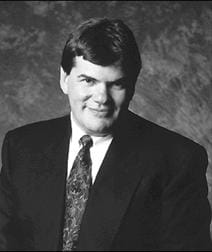
Photo: Unknown author / Public domain (source: Wikimedia Commons)
Born on March 16, 1952 in Paris, France, Philippe Kahn is an entrepreneur and computer scientist. Philippe Kahn is 74 years old as of 2026. Education on record includes University of Nice Sophia Antipolis.
My Take
What fascinates me about Philippe Kahn is how a French mathematician became one of Silicon Valley's most relentless serial founders, building Borland, Starfish, LightSurf, and Fullpower. But the detail I keep returning to is the camera phone he improvised in 1997 just to share his newborn daughter's photo. That single act of impatient love arguably rewired how billions of us communicate today. I admire founders who solve a personal problem first and only later realize they've reshaped the world. Kahn strikes me as that rare engineer whose patents reflect not just cleverness but genuine human urgency. A quietly foundational figure.
This take was written by generative AI, one per person, from publicly reported facts (editorial policy). It is a reading of the record, not reporting.
1. Profile
- Name (English)
- Philippe Kahn
- Name (Japanese)
- フィリップ・カーン
- Reading
- ふぃりっぷ・かーん
- Born
- March 16, 1952 (age 74)
- Origin
- Paris, France
- Occupation
- entrepreneur / computer scientist
- Zodiac / Chinese zodiac
- Pisces / Dragon
2. Background
- University
- University of Nice Sophia Antipolis
3. Links
4. About this entry
Tags
- Last updated
Facts are limited to publicly available information up to 2024; non-public or unconfirmed items are omitted. English text is machine-assisted (facts translated by Sonnet, "My Take" written by Opus 4.8). The Japanese page is the source of record.
Frequently asked questions
When was Philippe Kahn born?
Born March 16, 1952 (age 74).
Where is Philippe Kahn from?
Philippe Kahn is from Paris, France.
What does Philippe Kahn do?
Philippe Kahn works as entrepreneur, computer scientist.
Entrepreneur — see all → · Computer scientist — see all → · More people from France →