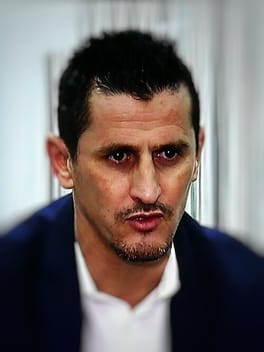
Photo: محمد الهطلاني / CC BY-SA 4.0 (source: Wikimedia Commons)
Public records list Rafik Saïfi as an association football player and association football coach. Rafik Saïfi was born in Algiers, Algiers Province, Algeria on February 7, 1975. That works out to 51 years old in 2026. The listed height is 178 cm.
My Take
Rafik Saïfi reads to me as pure Algerian football spirit distilled. Born in Algiers, he spent most of his playing days in France as a forward and attacking midfielder, finishing with 18 goals in 64 caps for his country, no small return at international level. North African players who carve out real careers in Europe's demanding leagues earn my respect for the resilience that requires. What I appreciate even more is the second act: leading Algeria's under-23 side as a coach, handing down what the game taught him. That cycle of taking and giving back is the part of his story I value most, a Mediterranean-spanning life built on grit.
This take was written by generative AI, one per person, from publicly reported facts (editorial policy). It is a reading of the record, not reporting.
1. Profile
- Name (English)
- Rafik Saïfi
- Name (Japanese)
- ラフィク・サイフィ
- Reading
- らふぃく・さいふぃ
- Born
- February 7, 1975 (age 51)
- Origin
- Algiers, Algiers Province, Algeria
- Height
- 178 cm
- Occupation
- association football player / association football coach
- Zodiac / Chinese zodiac
- Aquarius / Rabbit
2. Links
3. About this entry
Tags
- Last updated
Facts are limited to publicly available information up to 2024; non-public or unconfirmed items are omitted. English text is machine-assisted (facts translated by Sonnet, "My Take" written by Opus 4.8). The Japanese page is the source of record.
Frequently asked questions
When was Rafik Saïfi born?
Born February 7, 1975 (age 51).
Where is Rafik Saïfi from?
Rafik Saïfi is from Algiers, Algiers Province, Algeria.
What does Rafik Saïfi do?
Rafik Saïfi works as association football player, association football coach.
How tall is Rafik Saïfi?
Rafik Saïfi is 178 cm.
Association football player — see all → · Association football coach — see all → · More people from Algeria →