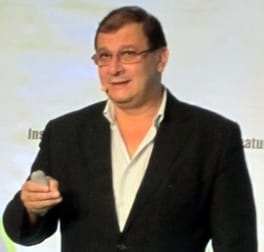
Photo: La doc du 92 / CC BY-SA 4.0 (source: Wikimedia Commons)
Gilles-Éric Séralini is a molecular biologist, professor and university teacher. Gilles-Éric Séralini was born in Annaba, Annaba Province, Algeria on August 23, 1960. That works out to 66 years old in 2026. Education on record includes University of Montpellier. Listed accolades include Knight of the National Order of Merit.
My Take
What strikes me about Séralini is his willingness to be unpopular. Born in Algeria, trained in France, he built a career around questions most scientists would rather not touch publicly, and he paid for it in controversy. I don't read his story as a verdict on who was right about GMOs; I read it as a study in scientific friction, the messy way knowledge actually advances when someone refuses to sit quietly. A man who holds the National Order of Merit yet keeps wading into argument has chosen conviction over comfort. I find that kind of stubborn, inconvenient sincerity oddly admirable, even when it courts dispute.
This take was written by generative AI, one per person, from publicly reported facts (editorial policy). It is a reading of the record, not reporting.
1. Profile
- Name (English)
- Gilles-Éric Séralini
- Name (Japanese)
- ジル=エリック・セラリーニ
- Reading
- じる=えりっく・せらりーに
- Born
- August 23, 1960 (age 66)
- Origin
- Annaba, Annaba Province, Algeria
- Occupation
- molecular biologist / professor / university teacher / Doctor / biologist
- Zodiac / Chinese zodiac
- Virgo / Rat
2. Background
- University
- University of Montpellier
Awards & achievements
- Knight of the National Order of Merit
3. Links
- Official sitehttps://www.seralini.fr/
- Wikipedia (English)https://en.wikipedia.org/wiki/Gilles-%C3%89ric%20S%C3%A9ralini
- Wikipedia (Japanese)https://ja.wikipedia.org/wiki/%E3%82%B8%E3%83%AB%EF%BC%9D%E3%82%A8%E3%83%AA%E3%83%83%E3%82%AF%E3%83%BB%E3%82%BB%E3%83%A9%E3%83%AA%E3%83%BC%E3%83%8B
- Wikidatahttps://www.wikidata.org/wiki/Q3295
4. About this entry
Tags
- Last updated
Facts are limited to publicly available information up to 2024; non-public or unconfirmed items are omitted. English text is machine-assisted (facts translated by Sonnet, "My Take" written by Opus 4.8). The Japanese page is the source of record.
Frequently asked questions
When was Gilles-Éric Séralini born?
Born August 23, 1960 (age 66).
Where is Gilles-Éric Séralini from?
Gilles-Éric Séralini is from Annaba, Annaba Province, Algeria.
What does Gilles-Éric Séralini do?
Gilles-Éric Séralini works as molecular biologist, professor, university teacher, Doctor, biologist.