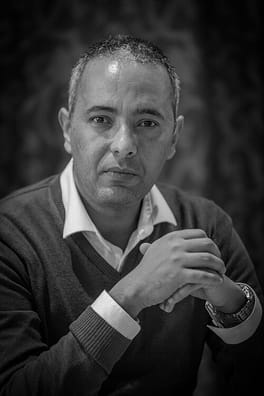
Photo: Photo Claude TRUONG-NGOC / CC BY-SA 3.0 (source: Wikimedia Commons)
Kamel Daoud, born on June 17, 1970 in Mostaganem, Mostaganem Province, Algeria, is a journalist and writer. As of 2026, Kamel Daoud is 56 years old. Schooling on record includes University of Oran. Recorded honors include Livre et droits humains award (2017), Prix mondial Cino Del Duca (2019), Revue des deux Mondes prize (2019) and 2 more. Notable works include The Meursault Investigation and Houris.
My Take
Kamel Daoud is one of those rare writers whose courage matches his talent. Born in Mostaganem in 1970 and trained as a journalist out of the University of Oran, he announced himself by reimagining Camus's The Stranger from the Arab side in The Meursault Investigation, then capped it with the 2024 Prix Goncourt for Houris. What moves me is not the trophy shelf but the stance: writing in French while wrestling honestly with Algerian reality takes nerve few possess. His journalistic roots give the fiction a bracing, lived-in edge. To me he is essential reading, an author whose willingness to provoke is inseparable from his moral seriousness.
This take was written by generative AI, one per person, from publicly reported facts (editorial policy). It is a reading of the record, not reporting.
1. Profile
- Name (English)
- Kamel Daoud
- Name (Japanese)
- カメル・ダウド
- Reading
- かめる・だうど
- Born
- June 17, 1970 (age 56)
- Origin
- Mostaganem, Mostaganem Province, Algeria
- Occupation
- journalist / writer
- Zodiac / Chinese zodiac
- Gemini / Dog
2. Background
- University
- University of Oran
Awards & achievements
- 2017 Livre et droits humains award
- 2019 Prix mondial Cino Del Duca
- 2019 Revue des deux Mondes prize
- 2020 Prix de la laïcité
- 2024 Prix Goncourt
3. Works & records
Filmography / notable works
| Category | Title |
|---|---|
| Notable work | The Meursault Investigation |
| Notable work | Houris |
4. Links
- Wikipedia (English)https://en.wikipedia.org/wiki/Kamel%20Daoud
- Wikipedia (Japanese)https://ja.wikipedia.org/wiki/%E3%82%AB%E3%83%A1%E3%83%AB%E3%83%BB%E3%83%80%E3%82%A6%E3%83%89
- Wikidatahttps://www.wikidata.org/wiki/Q3192364
5. About this entry
Tags
- Last updated
Facts are limited to publicly available information up to 2024; non-public or unconfirmed items are omitted. English text is machine-assisted (facts translated by Sonnet, "My Take" written by Opus 4.8). The Japanese page is the source of record.
Frequently asked questions
When was Kamel Daoud born?
Born June 17, 1970 (age 56).
Where is Kamel Daoud from?
Kamel Daoud is from Mostaganem, Mostaganem Province, Algeria.
What does Kamel Daoud do?
Kamel Daoud works as journalist, writer.
What is Kamel Daoud known for?
Notable works include The Meursault Investigation, Houris.
Journalist — see all → · Writer — see all → · More people from Algeria →