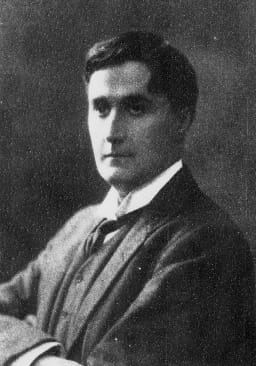
Photo: James Bacon and Sons, Leeds / Public domain (source: Wikimedia Commons)
Born on October 12, 1872 in Down Ampney, United Kingdom, Ralph Vaughan Williams was a conductor, classical composer and choreographer. Ralph Vaughan Williams died on August 26, 1958, aged 85. Education on record includes Trinity College. Awards on record include Royal Philharmonic Society Gold Medal (1930), Albert Medal (1955), Walter Willson Cobbett Medal (1930) and 2 more. Credited works include Symphony No. 4, Symphony No. 5 and Sir John in Love.
My Take
Vaughan Williams is, to me, the sound of England itself: hedgerows, sea mist, and quiet dignity rather than grand spectacle. What moves me most is his persistence, nine symphonies written across sixty years, refusing to stop reinventing himself even in old age. The Lark Ascending still gives me chills, that violin line dissolving into open sky. Some dismiss him as pastoral and old-fashioned, but I hear a deep, unfussy humanity that never dates. The Order of Merit and Albert Medal confirm his stature, yet his real legacy is emotional. He is a composer I return to whenever I need calm.
This take was written by generative AI, one per person, from publicly reported facts (editorial policy). It is a reading of the record, not reporting.
1. Profile
- Name (English)
- Ralph Vaughan Williams
- Name (Japanese)
- レイフ・ヴォーン・ウィリアムズ
- Reading
- れいふ・ゔぉーん・うぃりあむず
- Born
- October 12, 1872 – August 26, 1958
- Origin
- Down Ampney, United Kingdom
- Occupation
- conductor / classical composer / choreographer / organist / pedagogue
- Zodiac / Chinese zodiac
- Libra / Monkey
2. Background
- University
- Trinity College
Awards & achievements
- 1930 Royal Philharmonic Society Gold Medal
- 1955 Albert Medal
- 1930 Walter Willson Cobbett Medal
- Order of Merit
- Honorary Member of the International Society for Contemporary Music
3. Works & records
Filmography / notable works
| Category | Title |
|---|---|
| Notable work | Symphony No. 4 |
| Notable work | Symphony No. 5 |
| Notable work | Sir John in Love |
| Notable work | A Sea Symphony |
| Notable work | The Lark Ascending |
| Notable work | A Pastoral Symphony |
4. Links
- Official sitehttps://rvwsociety.com
- Wikipedia (English)https://en.wikipedia.org/wiki/Ralph%20Vaughan%20Williams
- Wikipedia (Japanese)https://ja.wikipedia.org/wiki/%E3%83%AC%E3%82%A4%E3%83%95%E3%83%BB%E3%83%B4%E3%82%A9%E3%83%BC%E3%83%B3%E3%83%BB%E3%82%A6%E3%82%A3%E3%83%AA%E3%82%A2%E3%83%A0%E3%82%BA
- Wikidatahttps://www.wikidata.org/wiki/Q207947
5. About this entry
Tags
- Last updated
Facts are limited to publicly available information up to 2024; non-public or unconfirmed items are omitted. English text is machine-assisted (facts translated by Sonnet, "My Take" written by Opus 4.8). The Japanese page is the source of record.
Frequently asked questions
When was Ralph Vaughan Williams born?
Ralph Vaughan Williams was born on October 12, 1872.
When did Ralph Vaughan Williams die?
Ralph Vaughan Williams died on August 26, 1958, aged 85.
Where was Ralph Vaughan Williams from?
Ralph Vaughan Williams was from Down Ampney, United Kingdom.
What did Ralph Vaughan Williams do?
Ralph Vaughan Williams worked as conductor, classical composer, choreographer, organist, pedagogue.
Where did Ralph Vaughan Williams study?
Ralph Vaughan Williams attended Trinity College.
What was Ralph Vaughan Williams known for?
Ralph Vaughan Williams's notable works include Symphony No. 4, Symphony No. 5, Sir John in Love.
Conductor — see all → · More people from the United Kingdom → · More people born on October 12 →