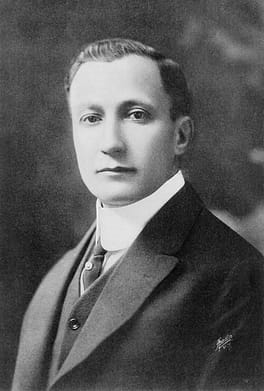
Photo: Famous Players Film Company, photograph by Apeda Studio / Public domain (source: Wikimedia Commons)
Born on January 7, 1873, Adolph Zukor was from Ricse, Borsod-Abaúj-Zemplén County, Hungary. Adolph Zukor was a film producer and film director. Death is recorded on June 10, 1976, at the age of 103. Recorded honors include Academy Honorary Award (1948) and star on Hollywood Walk of Fame.
My Take
Zukor fascinates me not as a celebrity but as an architect of an entire industry. He rose from a Hungarian village to co-found Paramount and, with 1913's feature-length work, helped drag cinema from sideshow curiosity to serious storytelling. What stays with me is the sheer span of his life: 103 years, long enough to watch the medium he helped invent grow from nickelodeons to the studio system and beyond. I have a soft spot for the builders who lay foundations rather than chase the spotlight, and Zukor is the definitive example. The Honorary Oscar feels almost like an understatement for someone whose fingerprints are on the whole art form.
This take was written by generative AI, one per person, from publicly reported facts (editorial policy). It is a reading of the record, not reporting.
1. Profile
- Name (English)
- Adolph Zukor
- Name (Japanese)
- アドルフ・ズーカー
- Reading
- あどるふ・ずーかー
- Born
- January 7, 1873 – June 10, 1976
- Origin
- Ricse, Borsod-Abaúj-Zemplén County, Hungary
- Occupation
- film producer / film director
- Zodiac / Chinese zodiac
- Capricorn / Rooster
2. Background
Awards & achievements
- 1948 Academy Honorary Award
- star on Hollywood Walk of Fame
3. Links
4. About this entry
Tags
- Last updated
Facts are limited to publicly available information up to 2024; non-public or unconfirmed items are omitted. English text is machine-assisted (facts translated by Sonnet, "My Take" written by Opus 4.8). The Japanese page is the source of record.
Frequently asked questions
When was Adolph Zukor born?
Born January 7, 1873.
When did Adolph Zukor die?
Died June 10, 1976, aged 103.
Where was Adolph Zukor from?
Adolph Zukor was from Ricse, Borsod-Abaúj-Zemplén County, Hungary.
What did Adolph Zukor do?
Adolph Zukor worked as film producer, film director.
Film producer — see all → · Film director — see all → · More people from Hungary →