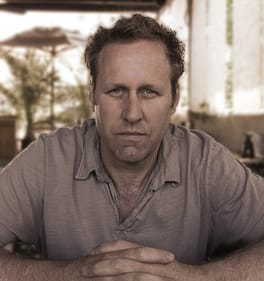
Photo: AVARYdotcom / CC BY-SA 3.0 (source: Wikimedia Commons)
Born on August 23, 1965 in Flin Flon, Manitoba, Canada, Roger Avary is a screenwriter, film director and television producer. As of 2026, Roger Avary is 61 years old. Awards on record include Academy Award for Best Writing, Original Screenplay (1995).
My Take
Roger Avary is one of those names I associate with a specific moment in cinema. Sharing the Best Original Screenplay Oscar for Pulp Fiction in 1995, alongside Quentin Tarantino, put him at the center of an era that rewired how dialogue could sound on screen. I find it interesting that he's Canadian-born and built a career spanning writing, directing, and producing rather than staying in one lane. I don't want to flatten his work down to a single famous credit, but that screenplay carries undeniable weight. What I'd most want to ask him is how it felt to help shape a script that so many writers still study today.
This take was written by generative AI, one per person, from publicly reported facts (editorial policy). It is a reading of the record, not reporting.
1. Profile
- Name (English)
- Roger Avary
- Name (Japanese)
- ロジャー・エイヴァリー
- Reading
- ろじゃー・えいゔぁりー
- Born
- August 23, 1965 (age 61)
- Origin
- Flin Flon, Manitoba, Canada
- Occupation
- screenwriter / film director / television producer / film producer / director
- Zodiac / Chinese zodiac
- Virgo / Snake
2. Background
Awards & achievements
- 1995 Academy Award for Best Writing, Original Screenplay
3. Links
- Official sitehttp://www.avary.com
- Xhttps://x.com/AVARY
- Wikipedia (English)https://en.wikipedia.org/wiki/Roger%20Avary
- Wikipedia (Japanese)https://ja.wikipedia.org/wiki/%E3%83%AD%E3%82%B8%E3%83%A3%E3%83%BC%E3%83%BB%E3%82%A8%E3%82%A4%E3%83%B4%E3%82%A1%E3%83%AA%E3%83%BC
- Wikidatahttps://www.wikidata.org/wiki/Q450720
4. About this entry
Tags
- Last updated
Facts are limited to publicly available information up to 2024; non-public or unconfirmed items are omitted. English text is machine-assisted (facts translated by Sonnet, "My Take" written by Opus 4.8). The Japanese page is the source of record.
Frequently asked questions
When was Roger Avary born?
Born August 23, 1965 (age 61).
Where is Roger Avary from?
Roger Avary is from Flin Flon, Manitoba, Canada.
What does Roger Avary do?
Roger Avary works as screenwriter, film director, television producer, film producer, director.
Screenwriter — see all → · Film director — see all → · More people from Canada →