The Man Who Turned History into a Page-Turner: How Teichi Fukuda Became Ryotaro Shiba
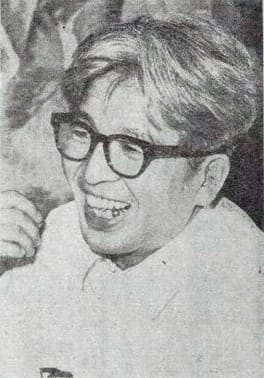
In a textbook, the samurai wars and the fall of the shogunate are little more than dates and names. But in the hands of one writer, Sakamoto Ryoma suddenly laughs at your side, and Hijikata Toshizo grips his sword and charges into the night. That magic was given to postwar Japan by Ryotaro Shiba.
His real name was Teichi Fukuda, born in 1923 in the Namba district of Osaka. A newspaper reporter who wrote fiction on the side, he spent four decades rewriting how an entire nation understood its own past. This is the story of how a man made of pure curiosity became a national treasure.
An Osaka Boy and a Young Man in a Tank
Teichi Fukuda was born in Namba Nishikanda-cho in the south of Osaka, in what is now the Shiokusa area of Naniwa-ku. From boyhood he loved libraries and secondhand bookshops, growing up buried in books.
He enrolled in the Mongolian Studies department of the Osaka School of Foreign Languages, but the times would not leave him alone. In 1943, wartime student mobilization forced his early graduation. Conscripted into the 19th Tank Regiment, he was later assigned to the 1st Tank Regiment in Manchuria. The experience of spending part of his youth inside a tank would later harden into a single question — why did Japan wage such a reckless war? — that runs deep beneath all his work.
The Reporter, and the Birth of "Ryotaro Shiba"
Demobilized in 1946, Fukuda joined the Shin-Nihon Shimbun in Kyoto, then moved to the Sankei Shimbun. Even as he worked the reporter's beat, his pen drifted steadily toward fiction.
In 1956 he published The Persian Magician, using for the first time the pen name Ryotaro Shiba. The name honored the Chinese historian Sima Qian (Shiba Sen in Japanese), whom he revered; "Ryotaro" carries the humble meaning of falling "far short" of his idol. That bashful, self-deprecating choice says everything about the man. The story won the Kodan Club Prize that same year.
The Naoki Prize and the Leap to Full-Time Writing
The turning point came quickly. In 1960 he won the 42nd Naoki Prize for Owl's Castle, a tale of ninja that made him an author to watch overnight.
The next year, in 1961, Fukuda resigned from the Sankei Shimbun and committed to writing full-time. It meant trading the security of a reporter's salary, but it was here that the full force of Ryotaro Shiba was unleashed. His unmatched gift for weaving fragments of history into living narrative was sharpened to its edge in these years.
Ryoma ga Yuku and Clouds Above the Hill: Becoming a National Author
In 1966 he completed the serialization of Ryoma ga Yuku. By portraying the patriot Sakamoto Ryoma as a talkative yet utterly lovable young man, the novel defined the popular image of Ryoma for generations to come. That same year he won the Kikuchi Kan Prize, alongside Kunitori Monogatari.
Then, beginning in 1968, Clouds Above the Hill traced the soaring ambitions of those who lived through Japan's "uphill" Meiji era. The work was later adapted into an NHK special drama broadcast from 2009 to 2011, drawing in entirely new generations. His novels had outgrown fiction itself, shaping the very way Japanese people feel about their own modern history.
A Curiosity That Bought Out Bookshops: The Journeys of Kaido wo Yuku
Behind Shiba's writing lay an almost obsessive appetite for research. The story that he would buy out entire stockrooms of old books for a single project captures just how hungry he was for the raw stuff of history.
In 1971 he began serializing Kaido wo Yuku in Shukan Asahi. Walking the old highways of Japan — and abroad — he observed the land, its history, and its people. The travelogue stretched to 43 volumes and was written without pause until the very year of his death in 1996. That he kept traveling past the age of seventy is proof of a curiosity that never dimmed. In 1993 he received the Order of Culture, sealing his place as a national author in both name and substance.
In February 1996, Ryotaro Shiba died of a ruptured abdominal aortic aneurysm at the National Osaka Hospital in Osaka, at the age of 72. He wrote, and told the story of history, to the very end.
He brought the sleeping figures of the textbooks back to life so vividly they seemed to speak from the next seat over. From the moment Teichi Fukuda — an everyman from Osaka — took up the name "Ryotaro" out of devotion to Sima Qian, Japanese history was reborn as something you simply could not put down.