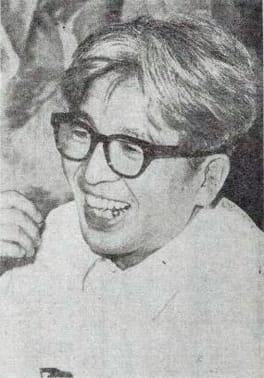
Photo: 講談社 撮影者不明 / Public domain (source: Wikimedia Commons)
My Take
Okay, hear me out: Ryotaro Shiba basically rewired how an entire country feels about its own past, and I love him for it. Born Teichi Fukuda in Osaka, he was a newspaperman who started moonlighting as a novelist, and once he hit his stride the Bakumatsu and the Sengoku era stopped being dusty textbook dates and turned into people you'd want to grab a drink with. Ryoma in "Ryoma ga Yuku," the doomed glory of "Clouds Above the Hill" he's the guy who made history binge-able decades before that was a thing. What gets me most, though, is the obsessive collector energy, supposedly buying out whole stacks of old books for research. And "Kaido wo Yuku," wandering Japan's old roads into his seventies? That's just pure, lifelong curiosity. Massive respect.
This take was written by generative AI, one per person, from publicly reported facts (editorial policy). It is a reading of the record, not reporting.
Story
The Man Who Turned History into a Page-Turner: How Teichi Fukuda Became Ryotaro Shiba
Overview
Ryotaro Shiba (born Teichi Fukuda, 1923–1996) was one of Japan's most celebrated historical novelists, best known for works such as Ryoma ga Yuku and Saka no Ue no Kumo that brought the Edo and Meiji periods to life for mass audiences. After working as a newspaper journalist for Sankei Shimbun, he debuted as a fiction writer in 1956 under the pen name Ryotaro Shiba — a humble allusion to the Chinese historian Sima Qian — and became a full-time writer in 1961. Over his four-decade career he received the Naoki Prize (1960), the Kikuchi Kan Prize (1966), the Yoshikawa Eiji Literary Prize (1972), and the Order of Culture (1993). He died in February 1996 at the National Osaka Hospital in Osaka, at the age of 72.
1. Profile
- Name (English)
- Ryotaro Shiba
- Name (Japanese)
- 司馬遼太郎
- Reading
- しば りょうたろう
- Real name
- 福田定一
- Born
- August 7, 1923 – February 12, 1996
- Origin
- Namba Nishikanda-cho, Minami-ku, Osaka (present-day Shiokusa, Naniwa-ku), Osaka, Japan
- Occupation
- Novelist / Nonfiction Writer / Literary Critic
- Zodiac / Chinese zodiac
- Leo / Boar
- Active years
- 1956–1996
2. Background
- University
- Osaka School of Foreign Languages, Mongolian Studies (present-day Osaka University School of Foreign Studies) — graduated early in 1943 due to wartime student mobilization
- Debut
- 1956: Published The Persian Magician (Persia no Genjutsushi) while working as a Sankei Shimbun journalist; first use of the pen name Ryotaro Shiba
Awards & achievements
- 1956 8th Kodan Club Prize (The Persian Magician)
- 1960 42nd Naoki Prize (Fukuro no Shiro / Owl's Castle)
- 1966 14th Kikuchi Kan Prize (Ryoma ga Yuku; Kunitori Monogatari)
- 1972 6th Yoshikawa Eiji Literary Prize (Yo ni Sumu Hibi)
- 1976 32nd Japan Art Academy Prize and Imperial Prize, Literature (Kukai no Fukei and other works)
- 1983 Asahi Prize (fiscal 1982)
- 1991 Person of Cultural Merit
- 1993 Order of Culture
Timeline
- 1923Born in Namba Nishikanda-cho, Minami-ku, Osaka (given name: Teichi Fukuda)
- 1941Enrolled in Osaka School of Foreign Languages, Mongolian Studies department
- 1943Graduated early due to wartime student mobilization; conscripted into the 19th Tank Regiment and later assigned to the 1st Tank Regiment in Manchuria
- 1946Demobilized; joined Shin-Nihon Shimbun in Kyoto, later transferred to Sankei Shimbun
- 1956Published The Persian Magician; adopted the pen name Ryotaro Shiba
- 1960Won the 42nd Naoki Prize for Owl's Castle
- 1961Resigned from Sankei Shimbun to become a full-time writer
- 1966Completed serialization of Ryoma ga Yuku; won Kikuchi Kan Prize alongside Kunitori Monogatari
- 1971Began serialization of Kaido wo Yuku in Shukan Asahi (continued until 1996)
- 1993Received the Order of Culture
- 1996Died of a ruptured abdominal aortic aneurysm at Osaka National Hospital, aged 72
3. Relationships
- Spouse
- Midori Fukuda (née Matsumi; remarried 1959)
- Children
- One son (born 1952, from his first marriage)
4. Personality
Hobbies
- Reading
- Historical research
- Travel (walking old highways)
Specialties
- Historical fiction writing
- Nonfiction writing
5. Works & records
Filmography / notable works
| Category | Title | Role | Year |
|---|---|---|---|
| Book | Fukuro no Shiro (Owl's Castle) | Author | 1959 |
| Book | Moeyoken (Blaze, My Sword) | Author | 1964 |
| Book | Ryoma ga Yuku (Ryoma Is Coming) | Author | 1966 |
| Book | Kunitori Monogatari (The Castle on the Horizon) | Author | 1966 |
| Book | Saka no Ue no Kumo (Clouds Above the Hill) | Author | 1972 |
| Book | Yo ni Sumu Hibi (Days of Life in the World) | Author | 1971 |
| Book | Tobu ga Gotoku (Like the Wind) | Author | 1975 |
| Book | Kaido wo Yuku (Traveling the Old Highways, 43 vols.) | Author | 1971 |
| Book | Dattan Shippuroku (The Wind Rider of Tartary) | Author | 1987 |
| Book | Kono Kuni no Katachi (The Shape of This Country) | Author | 1993 |
6. Links
- Official sitehttps://www.shibazaidan.or.jp/
- Wikipedia (Japanese)https://ja.wikipedia.org/wiki/%E5%8F%B8%E9%A6%AC%E9%81%BC%E5%A4%AA%E9%83%8E
- Wikidatahttps://www.wikidata.org/wiki/Q1087887
7. About this entry
Tags
- Last updated
Only publicly available facts are listed; non-public or unconfirmed items are omitted. Base data was compiled from Wikidata from June 2026 onward; ages are recalculated daily and deaths are checked against Wikidata on an ongoing basis. English text is machine-assisted (facts translated by Sonnet, "My Take" written by Opus 4.8). The Japanese page is the source of record.
Frequently asked questions
When was Ryotaro Shiba born?
Ryotaro Shiba was born on August 7, 1923.
When did Ryotaro Shiba die?
Ryotaro Shiba died on February 12, 1996, aged 72.
Where was Ryotaro Shiba from?
Ryotaro Shiba was from Namba Nishikanda-cho, Minami-ku, Osaka (present-day Shiokusa, Naniwa-ku), Osaka, Japan.
What did Ryotaro Shiba do?
Ryotaro Shiba worked as Novelist, Nonfiction Writer, Literary Critic.
When was Ryotaro Shiba active?
Ryotaro Shiba was active from 1956 to 1996.
What was Ryotaro Shiba known for?
Ryotaro Shiba's notable works include Fukuro no Shiro (Owl's Castle), Moeyoken (Blaze, My Sword), Ryoma ga Yuku (Ryoma Is Coming).
Novelist — see all → · More people from Japan → · More people born on August 7 →