The Man Who Turned Even the Sound of Rain into Music: Ryuichi Sakamoto, the Wandering Sound They Called the Professor
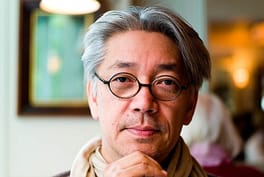
One note falls from the piano, then another. Why should that alone tighten the chest so completely? In Ryuichi Sakamoto's music, a sorrow beyond words coexists with an endless stillness.
The man who invented the future of techno-pop went on to move audiences to tears in cinemas around the world and became the first Japanese composer to win the Academy Award for Best Original Score. In his later years, he turned even the sound of rain and the noise of the city into music. Let us trace the long, far-reaching journey of sound traveled by the composer they called the Professor.
A Composer Forged at Tokyo University of the Arts
Ryuichi Sakamoto was born on January 17, 1952, in Nakano, Tokyo. After attending Soshigaya Elementary School and Chitose Junior High in Setagaya, and Tokyo Metropolitan Shinjuku High School, he graduated from the composition department of the Faculty of Music at Tokyo University of the Arts and completed his master's degree there.
This background of rigorous formal musical training was precisely the soil from which the nickname Professor would later grow. Intellect and curiosity would drive his music throughout his entire life.
YMO and the Future of Techno
In 1978, Sakamoto released his solo album Thousand Knives. That same year, at the invitation of Haruomi Hosono, he co-founded Yellow Magic Orchestra together with Yukihiro Takahashi.
The futuristic sound produced by their synthesizers sent shockwaves through the music scene not only in Japan but around the world. At the cutting edge, where electronic tones danced and bleeped, the name Ryuichi Sakamoto became known all at once. Sounds no one had ever heard before spread outward from here to the rest of the world.
Film Scores That Made the World Cry
In 1983, Sakamoto composed the music for the film Merry Christmas, Mr. Lawrence and appeared in it as an actor as well. That mournful main theme is still beloved across the world today, and in 1984 it earned him the BAFTA Award for Best Original Score.
Then, in 1987, he scored The Last Emperor, and the following year, in 1988, he became the first Japanese composer to win the Academy Award for Best Original Score. For the same film he also took the Golden Globe and the Grammy, etching his name worldwide as a composer who could paint such depths of sorrow with a single piano.
Healing Sounds and a Cultural Phenomenon
In 1999, the album Ura BTTB became a million-seller. energy flow, used in a commercial for the Regain energy drink, became a cultural phenomenon that sparked a healing boom across Japan at the time. It was the moment a composer often called difficult and avant-garde reached straight into ordinary living rooms.
Balancing commercial success with artistic depth, Sakamoto founded the music label commmons in 2006, expanding the space for his own expression. In his private life, he married the musician Akiko Yano in 1982 (they divorced in 2006); his daughter Miu Sakamoto is a musician, and his son Neo Sora is a filmmaker.
To the Very Last Note
In 2020, Sakamoto was diagnosed with cancer. Even so, he never set down the work of creation. In his final years, while facing his illness, he stepped into a new realm in which he seemed to hear even the sound of rain and the noise of the streets as music itself.
On March 28, 2023, Ryuichi Sakamoto passed away at the age of 71. When the news spread, tributes poured in from all over the world at once, a quiet, fresh reminder of just how vast a presence he had been.
He left, leaving nothing behind but the sound, and that sound still goes on playing somewhere in the world. The very fact that the whole planet mourned him in unison when he died speaks more eloquently than anything of how great a figure Ryuichi Sakamoto truly was.
From the future of techno to the summit of film music, and finally to the sound of rain: if you want to know more about the Professor's long journey, follow his awards and discography on his celeb-db profile page.