Grease-Stained Hands That Put the World on the Road: Soichiro Honda and the Soul of a Village Workshop
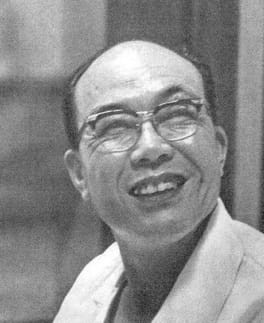
A boy born in a mountain village in Shizuoka would one day fill the roads of the entire world with motorcycles and cars of his own making. Had anyone told the young Soichiro Honda such a tale, he would likely have laughed and snapped, "Enough talk — pick up a tool and get to work."
He had no diploma and no powerful backers. What he had was a passion for machines that bordered on infatuation, and a single unwavering principle that guided his whole life: "Do not imitate others." With nothing but those two things, Honda (1906–1991) built a small-town repair shop into the global manufacturer Honda Motor Co., Ltd.
This is the story of an engineer who smelled of engine oil, and who turned a dream into genuine, world-changing power.
From Apprentice to Independent: A Boy in Love with Machines
Soichiro Honda was born on November 17, 1906, in Mitsuo Village, Iwata District, Shizuoka Prefecture (present-day Tenryu Ward, Hamamatsu). He did not pursue formal schooling beyond elementary level. In 1922, while still in his teens, he moved to Tokyo and threw himself into an apprenticeship at Tokyo Art Shokai, an automobile repair shop in Yushima.
There, wrestling daily with oil and metal, he learned the joy of fixing and remaking machines down to his bones. Under his master Ikuzo Sakakibara he honed his craft, and in 1928 he finally struck out on his own, opening the Hamamatsu branch of Tokyo Art Shokai. That first step in auto repair was the opening page of a far larger story to come.
The Birth of Honda Motor Co.
After going independent, his interest shifted from fixing things to making them. In 1934 he founded Tokai Seiki Heavy Industry, testing his appetite for true manufacturing.
Then, in 1948, he established Honda Motor Co., Ltd. and became its representative director. The very next year, in 1949, the company released its first in-house motorcycle, the Dream. The repair-shop man was now competing with products bearing his own name. He entrusted the reins of management to his brilliant partner Takeo Fujisawa, while Honda himself stayed relentlessly on the factory floor — a division of roles that became the hidden engine of Honda's rise.
"We Will Win at the Isle of Man": A Declaration Called Reckless
In 1954, Soichiro Honda made a declaration that stunned everyone around him: Honda would enter the Isle of Man TT in Britain, the most prestigious motorcycle race in the world. For a Japanese manufacturer of that era, the goal could only be described as reckless.
But Honda meant it. He believed the extreme arena of racing was the finest training ground for forging technology at top speed. And in 1961, Honda swept positions one through five in both the 125 cc and 250 cc classes — a total domination no one had predicted. The world that had laughed at his "recklessness" now had to look up at Honda instead.
The Super Cub and a World First
While conquering the racing summit, Honda also created products woven into everyday life. The Super Cub C100, released in 1958, was sturdy, economical, and easy for anyone to handle — a beloved machine across the globe and a legendary model produced in staggering numbers for decades.
In 1963 he unveiled the S500, Honda's first four-wheeled passenger car, expanding from two wheels to four. Then, in 1972, he achieved another world first: the CVCC engine, the first in the world to comply with America's strict Muskie Act emissions standards. A barrier that major corporations had dismissed as impossible was cleared by a company that had grown out of a Hamamatsu workshop.
Hurling Wrenches, and Loyal to the End
Soichiro Honda was no saint. He was hot-tempered enough to hurl wrenches at subordinates when displeased, and he was known to bring down thunder on the factory floor. Yet at the same time, once he fell for a person or a piece of work, he stuck with it to the very end — a man of deep feeling.
In 1973, at the age of 67, he stepped down as president with grace, handing management to Fujisawa and technology to the next generation. He carried his aesthetic of departure all the way to the end. In 1989 he became the first Asian inducted into the Automotive Hall of Fame in the United States, his achievements honored across borders. "Do not imitate others." "Nothing is born from a person without dreams." His words still push countless makers forward today.
On August 5, 1991, Soichiro Honda passed away at the age of 84. What he left behind were the motorcycles and cars still running on roads all over the world — and a way of living that turned dreams into strength.
You need no diploma; grease-stained hands will do. Rather than imitate, believe in your own dream. The philosophy embodied by a small-town workshop man will never rust, so long as his products keep running across the generations.