From Fists to Light: How the Self-Taught Boxer Tadao Ando Built Silence
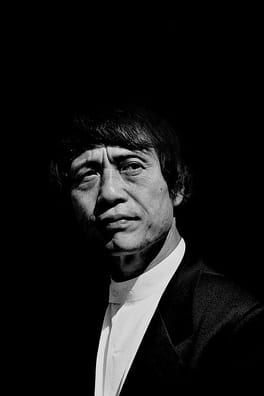
A man who once traded punches in the ring under the name "Great Ando" would go on to create some of the most serene architecture in the world. Does that single sentence convey just how improbable a figure Tadao Ando is?
He never went to university. He taught himself and earned a first-class architect's license, and ultimately won the Pritzker Prize, considered the highest honor in the field. Bare concrete walls, and a single shaft of light cutting through them. Stand in one of his spaces and you find yourself, almost involuntarily, lost for words.
How did a young man raised in the working-class districts of Osaka become the Tadao Ando known to the world? His story begins somewhere far from the conventional elite path.
The boy who boxed
Tadao Ando was born on September 13, 1941, in Minato Ward, Osaka, the firstborn of twins. He was raised in Asahi Ward as an adopted child of his maternal grandparents. He attended Osaka Prefectural Joto Industrial High School, but his next step was an unexpected one. In 1958, while still in high school, he obtained a professional boxing license. His ring name was "Great Ando."
His career as a boxer did not last long; he retired after about a year and a half. The boy who had fought with his fists would soon turn toward a different kind of contest in architecture. He quit after watching Fighting Harada train at his gym and realizing how far apart their physical gifts were.
Self-study and wandering
He did not go on to university. Drawn to architecture, Ando taught himself for more than fifteen hours a day, covering four years of architecture school in one, and passed the licensing exam on his first try: a second-class license in 1966, then a first-class license in 1973. The simple fact that he earned this license without any formal architectural training sets him apart.
In 1965 he wandered through Europe, the Americas, Africa, and Asia over roughly seven months. This journey, in which he saw the architecture of each place with his own eyes, became the real school for the self-taught young man. Above all, he revered Le Corbusier for the rest of his life, his devotion so deep that he later named a beloved dog "Cor." In 1969, Ando founded Tadao Ando Architect and Associates in Osaka and set out on his own.
Row House in Sumiyoshi and the Church of the Light
The work that announced his name to the world was the Row House in Sumiyoshi, completed in 1976. Acclaimed as a landmark in exposed concrete, it earned him the Architectural Institute of Japan Prize for Design in 1979. Yet in this house, you cannot move between rooms without crossing the open courtyard, meaning you need an umbrella on rainy days. It is an uncompromising philosophy that all but tells the client to toughen up.
Then, in 1989, his essence found its fullest form: the Church of the Light (Ibaraki Kasugaoka Church). Light pours through a cross-shaped slit cut into the concrete wall, casting a vivid cross of brightness within the darkness. It is a space that reaches the heart directly, beyond all reasoning. Together with the 1988 Church on the Water, it became emblematic of Ando as an architect who commands light and shadow.
The world embraces a self-taught architect
Recognition spread across the globe. After the Alvar Aalto Award in 1985 and the Japan Art Academy Prize in 1993, he finally received the Pritzker Architecture Prize in 1995. He went on to win the AIA Gold Medal in 2002 and the UIA Gold Medal in 2005, collecting international honors one after another.
At home, he was named a Person of Cultural Merit in 2003 and received the Order of Culture in 2010, along with decorations from France and Italy. His work ranges from museums to commercial complexes, including Benesse House and the Chichu Art Museum on Naoshima, Awaji Yumebutai, and Omotesando Hills. He also taught as a professor at the University of Tokyo, where he is now a Special University Professor Emeritus. A man who began outside the boundaries of academic credentials had taken his place at the front of the classroom.
In recent years, Ando underwent major surgery in which as many as five organs were removed. Even so, he has continued to work, still drawing his plans. His fighting spirit shows no sign of fading.
A young man from Osaka who once fought with his fists mastered architecture entirely on his own and built spaces of silence that leave people around the world without words. Anyone who has stood even once in the light of the cross at the Church of the Light will understand: that feeling that strikes the chest beyond all reason is the place a man who never stopped fighting finally arrived.