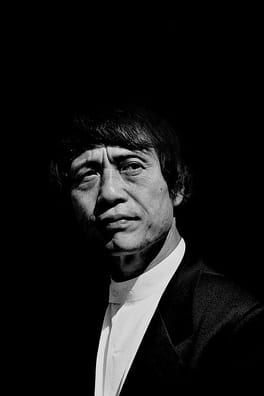
Photo: Christopher Schriner from Köln, Deutschland / CC BY-SA 2.0 (source: Wikimedia Commons)
My Take
Okay, Tadao Ando is one of those people whose résumé reads like a dare. A former pro boxer from Osaka who never went to architecture school, taught himself out of books, and then went and won the Pritzker? Come on. And what gets me is that this scrappy, self-made guy makes the most serene, hushed buildings on earth, all that bare concrete and shafts of light doing the talking. Walk into the Church of the Light and that glowing cross just stops your brain mid-thought, no explanation needed. He famously builds homes where you might need an umbrella to cross to the next room, and somehow you forgive him because the spaces feel alive. There's a stubborn, refuse-to-quit energy to him that I genuinely love. Total legend.
This take was written by generative AI, one per person, from publicly reported facts (editorial policy). It is a reading of the record, not reporting.
Story
From Fists to Light: How the Self-Taught Boxer Tadao Ando Built Silence
Overview
Tadao Ando was born on September 13, 1941, in Minato Ward, Osaka, and was raised in Asahi Ward by his maternal grandparents. Largely self-taught, he passed the first-class architect licensing examination without attending university and established Tadao Ando Architect and Associates in Osaka in 1969. He is internationally recognized for his mastery of exposed concrete construction and the interplay of light and shadow, most famously in works such as Row House in Sumiyoshi (1976) and Church of the Light (1989). In 1995 he was awarded the Pritzker Architecture Prize, widely regarded as the highest honor in the field.
1. Profile
- Name (English)
- Tadao Ando
- Name (Japanese)
- 安藤忠雄
- Reading
- あんどう ただお
- Born
- September 13, 1941 (age 85)
- Origin
- Minato Ward, Osaka, Japan (raised in Asahi Ward, Osaka)
- Occupation
- Architect
- Zodiac / Chinese zodiac
- Virgo / Snake
- Agency
- Tadao Ando Architect and Associates
- Active years
- 1969–present
2. Background
- High school
- Osaka Prefectural Joto Industrial High School
- University
- Did not attend university (obtained first-class architect license through self-study)
- Debut
- 1969: Established Tadao Ando Architect and Associates in Osaka and began his career as an architect
Awards & achievements
- 1979 Architectural Institute of Japan Prize for Design (Row House in Sumiyoshi)
- 1985 Alvar Aalto Award
- 1993 Japan Art Academy Prize
- 1995 Pritzker Architecture Prize
- 2002 AIA Gold Medal
- 2003 Person of Cultural Merit (Japan)
- 2005 UIA Gold Medal
- 2010 Order of Culture (Japan)
- 2013 Ordre des Arts et des Lettres (Commandeur)
- 2015 Order of Merit of the Italian Republic (Grande Ufficiale)
Timeline
- 1941Born as the firstborn of twins in Minato Ward, Osaka; raised as an adopted child by his maternal grandparents in Asahi Ward
- 1958Obtained a professional boxing license while still in high school, fighting under the ring name "Great Ando"; retired roughly a year and a half later
- 1965Traveled through Europe, the Americas, Africa, and Asia for approximately seven months, surveying architecture
- 1966Self-taught in architecture, obtained the second-class architect license (first-class license in 1973)
- 1969Founded Tadao Ando Architect and Associates in Osaka
- 1976Completed Row House in Sumiyoshi, a landmark work in exposed concrete that received wide critical acclaim
- 1989Completed Church of the Light (Ibaraki Kasugaoka Church)
- 1995Awarded the Pritzker Architecture Prize
- 1997Appointed professor at the University of Tokyo
- 2003Named professor emeritus at the University of Tokyo; designated a Person of Cultural Merit
3. Relationships
- Siblings
- Twin younger brother Takao Kitayama (urban planner and designer); younger brother Kojiro Kitayama (architect)
4. Personality
Hobbies
- Visiting architecture around the world
- Walking (10,000 steps a day)
- Going to the gym
Specialties
- Exposed concrete architecture
- Spatial design using light and shadow
- Former professional boxer
5. Works & records
Filmography / notable works
| Category | Title | Role | Year |
|---|---|---|---|
| Architecture | Row House in Sumiyoshi | Architect | 1976 |
| Architecture | Church of the Light (Ibaraki Kasugaoka Church) | Architect | 1989 |
| Architecture | Church on the Water | Architect | 1988 |
| Architecture | Benesse House (Naoshima) | Architect | 1992 |
| Architecture | Chichu Art Museum (Naoshima) | Architect | 2004 |
| Architecture | Awaji Yumebutai | Architect | 2000 |
| Architecture | Omotesando Hills | Architect | 2006 |
| Book | Kenchiku wo Kataru (Talking About Architecture) | Author | 1999 |
| Book | Rensen Renpai (Successive Battles, Successive Defeats) | Author | 2001 |
| Book | Shigoto wo Tsukuru: Watashi no Rirekisho (Creating Work: My Personal History) | Author | 2012 |
6. Links
- Wikipedia (Japanese)https://ja.wikipedia.org/wiki/%E5%AE%89%E8%97%A4%E5%BF%A0%E9%9B%84
- Wikidatahttps://www.wikidata.org/wiki/Q208220
7. About this entry
Tags
- Last updated
Only publicly available facts are listed; non-public or unconfirmed items are omitted. Base data was compiled from Wikidata from June 2026 onward; ages are recalculated daily and deaths are checked against Wikidata on an ongoing basis. English text is machine-assisted (facts translated by Sonnet, "My Take" written by Opus 4.8). The Japanese page is the source of record.
Frequently asked questions
When was Tadao Ando born?
Tadao Ando was born on September 13, 1941 and is 85 years old.
Where is Tadao Ando from?
Tadao Ando is from Minato Ward, Osaka, Japan (raised in Asahi Ward, Osaka).
What does Tadao Ando do?
Tadao Ando works as Architect.
Which high school did Tadao Ando attend?
Tadao Ando attended Osaka Prefectural Joto Industrial High School.
What agency is Tadao Ando with?
Tadao Ando is with Tadao Ando Architect and Associates.
How long has Tadao Ando been active?
Tadao Ando's recorded active years are 1969–present.
What is Tadao Ando known for?
Tadao Ando's notable works include Row House in Sumiyoshi, Church of the Light (Ibaraki Kasugaoka Church), Church on the Water.