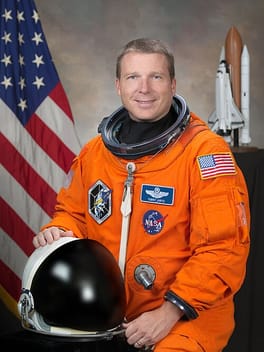
Photo: NASA / Public domain (source: Wikimedia Commons)
Born on December 1, 1967, Terry W. Virts is from Baltimore, Maryland, United States. Terry W. Virts is a military officer, astronaut and Trekkie. That works out to 58 years old in 2026. Education on record includes Oakland Mills High School and Embry–Riddle Aeronautical University. Awards on record include Air Medal and NASA Distinguished Service Medal (2015).
My Take
Terry Virts is exactly the kind of person I find inspiring. A Baltimore-born Air Force colonel who became a NASA astronaut and commanded the International Space Station, he is also, charmingly, a Trekkie, a man who chased the childhood dream and actually reached orbit. Air Medal, Distinguished Service Medal, the credentials are serious. He later tried his hand at Texas politics, which interests me less than the perspective he must carry. There is a way of seeing Earth that only those who have looked down on it possess, and I suspect Virts speaks from that rare vantage whenever he describes home.
This take was written by generative AI, one per person, from publicly reported facts (editorial policy). It is a reading of the record, not reporting.
1. Profile
- Name (English)
- Terry W. Virts
- Name (Japanese)
- テリー・W・バーツ
- Reading
- てりー・W・ばーつ
- Born
- December 1, 1967 (age 58)
- Origin
- Baltimore, Maryland, United States
- Occupation
- military officer / astronaut / Trekkie
- Zodiac / Chinese zodiac
- Sagittarius / Goat
2. Background
- High school
- Oakland Mills High School
- University
- Embry–Riddle Aeronautical University
Awards & achievements
- Air Medal
- 2015 NASA Distinguished Service Medal
3. Links
- Instagramhttps://www.instagram.com/astro_terry/
- Xhttps://x.com/astroterry
- Wikipedia (English)https://en.wikipedia.org/wiki/Terry%20Virts
- Wikidatahttps://www.wikidata.org/wiki/Q554415
4. About this entry
Tags
- Last updated
Facts are limited to publicly available information up to 2024; non-public or unconfirmed items are omitted. English text is machine-assisted (facts translated by Sonnet, "My Take" written by Opus 4.8). The Japanese page is the source of record.
Frequently asked questions
When was Terry W. Virts born?
Terry W. Virts was born on December 1, 1967 and is 58 years old.
Where is Terry W. Virts from?
Terry W. Virts is from Baltimore, Maryland, United States.
What does Terry W. Virts do?
Terry W. Virts works as military officer, astronaut, Trekkie.
Where did Terry W. Virts study?
Terry W. Virts attended Embry–Riddle Aeronautical University.
Military officer — see all → · Astronaut — see all → · More people from the United States → · More people born on December 1 →