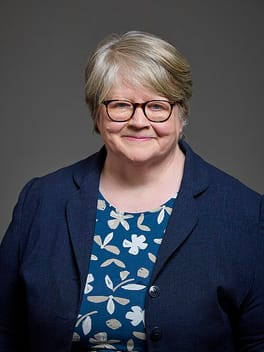
Photo: House of Lords / photography by Roger Harris / CC BY 3.0 (source: Wikimedia Commons)
Thérèse Coffey, born on November 18, 1971 in Billinge, United Kingdom, is a chemist, politician and financial analyst. As of 2026, Thérèse Coffey is 54 years old. Education on record includes St Edward's College. Listed accolades include Dame Commander of the Order of the British Empire (2024).
My Take
I find Thérèse Coffey fascinating precisely because her path defies the usual political mould. A chemist and former financial analyst, she brought a quantitative, scientific mind into Westminster and then became the first female Deputy Prime Minister in British history under Liz Truss. The tenure was brief, but the milestone is not trivial. I respect people who refuse to fit a single label, and Coffey clearly does not.
This take was written by generative AI, one per person, from publicly reported facts (editorial policy). It is a reading of the record, not reporting.
1. Profile
- Name (English)
- Thérèse Coffey
- Name (Japanese)
- テリーズ・コッフィー
- Reading
- てりーず・こっふぃー
- Born
- November 18, 1971 (age 54)
- Origin
- Billinge, United Kingdom
- Occupation
- chemist / politician / financial analyst
- Zodiac / Chinese zodiac
- Scorpio / Boar
2. Background
- University
- St Edward's College
Awards & achievements
- 2024 Dame Commander of the Order of the British Empire
3. Links
- Official sitehttps://theresecoffey.co.uk/
- Xhttps://x.com/theresecoffey
- Wikipedia (English)https://en.wikipedia.org/wiki/Th%C3%A9r%C3%A8se%20Coffey
- Wikipedia (Japanese)https://ja.wikipedia.org/wiki/%E3%83%86%E3%83%AC%E3%83%BC%E3%82%BA%E3%83%BB%E3%82%B3%E3%83%95%E3%82%A3%E3%83%BC
- Wikidatahttps://www.wikidata.org/wiki/Q290554
4. About this entry
Tags
- Last updated
Facts are limited to publicly available information up to 2024; non-public or unconfirmed items are omitted. English text is machine-assisted (facts translated by Sonnet, "My Take" written by Opus 4.8). The Japanese page is the source of record.
Frequently asked questions
When was Thérèse Coffey born?
Born November 18, 1971 (age 54).
Where is Thérèse Coffey from?
Thérèse Coffey is from Billinge, United Kingdom.
What does Thérèse Coffey do?
Thérèse Coffey works as chemist, politician, financial analyst.
Chemist — see all → · Politician — see all → · More people from the United Kingdom →