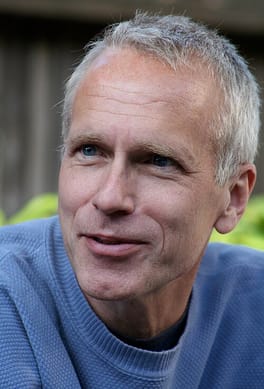
Photo: Charles Parnot / CC BY-SA 2.0 (source: Wikimedia Commons)
Brian Kobilka, born on May 30, 1955 in Little Falls, Minnesota, United States, is a biochemist, physicist and university teacher. Brian Kobilka is 71 years old as of 2026. Schooling on record includes University of Minnesota Duluth. Awards on record include Nobel Prize in Chemistry (2012), John J. Abel Award (1994), Mendel Medal (2015) and 2 more.
My Take
Brian Kobilka belongs to the rare breed of scientist whose work quietly shapes everyday life. His 2012 Nobel Prize, shared with Robert Lefkowitz, was for revealing how G protein-coupled receptors operate, and since a huge share of modern medicines act on exactly those receptors, his research underpins pharmacology in ways most of us never notice. I'm drawn to the arc here: a kid from small-town Little Falls, Minnesota, climbing from a regional university to a Stanford professorship and the top of his field. There is no glamour in spending decades chasing molecular structures, only obsession, and that is precisely the kind of greatness I most want to honor.
This take was written by generative AI, one per person, from publicly reported facts (editorial policy). It is a reading of the record, not reporting.
1. Profile
- Name (English)
- Brian Kobilka
- Name (Japanese)
- ブライアン・コビルカ
- Reading
- ぶらいあん・こびるか
- Born
- May 30, 1955 (age 71)
- Origin
- Little Falls, Minnesota, United States
- Occupation
- biochemist / physicist / university teacher / chemist / physiologist
- Zodiac / Chinese zodiac
- Gemini / Goat
2. Background
- University
- University of Minnesota Duluth
Awards & achievements
- 2012 Nobel Prize in Chemistry
- 1994 John J. Abel Award
- 2015 Mendel Medal
- 2016 The Louis and Artur Lucian Award in Cardiovascular Diseases
- 2010 Julius Axelrod Award
3. Links
4. About this entry
Tags
- Last updated
Facts are limited to publicly available information up to 2024; non-public or unconfirmed items are omitted. English text is machine-assisted (facts translated by Sonnet, "My Take" written by Opus 4.8). The Japanese page is the source of record.
Frequently asked questions
When was Brian Kobilka born?
Born May 30, 1955 (age 71).
Where is Brian Kobilka from?
Brian Kobilka is from Little Falls, Minnesota, United States.
What does Brian Kobilka do?
Brian Kobilka works as biochemist, physicist, university teacher, chemist, physiologist.
Biochemist — see all → · Physicist — see all → · More people from the United States →