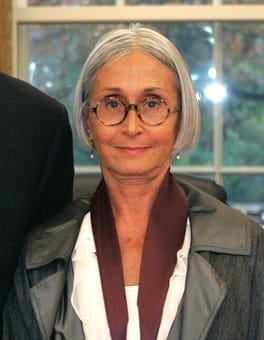
Photo: Susan Sterner.〔The original uploader was Emerson7 at English Wikipedia.〕 / Public domain (source: Wikimedia Commons)
Twyla Tharp was born on July 1, 1941 in Portland, Indiana, United States. Twyla Tharp is listed as a choreographer, writer and ballet dancer. That works out to 85 years old in 2026. Schooling on record includes Barnard College. Awards on record include Guggenheim Fellowship, MacArthur Fellows Program, National Medal of Arts and 5 more.
My Take
Twyla Tharp is one of those rare artists who treats genre boundaries as suggestions rather than walls. What fascinates me most isn't the avalanche of honors, from the MacArthur to a Harvard honorary doctorate, but the sheer stubbornness behind them. She built her own company, folded it into American Ballet Theatre, then rebuilt it again, refusing to let institutional gravity slow her down. Mixing classical, jazz and pop took real nerve in a tradition that prizes purity. For me, her real legacy is proving that discipline and rebellion can live in the same body, well past an age when most have stopped moving.
This take was written by generative AI, one per person, from publicly reported facts (editorial policy). It is a reading of the record, not reporting.
1. Profile
- Name (English)
- Twyla Tharp
- Name (Japanese)
- トワイラ・サープ
- Reading
- とわいら・さーぷ
- Born
- July 1, 1941 (age 85)
- Origin
- Portland, Indiana, United States
- Occupation
- choreographer / writer / dancer / ballet dancer / film director
- Zodiac / Chinese zodiac
- Cancer / Snake
2. Background
- University
- Barnard College
Awards & achievements
- Guggenheim Fellowship
- MacArthur Fellows Program
- National Medal of Arts
- Primetime Emmy Award for Outstanding Choreography
- 2013 Capezio Dance Award
- Kennedy Center Honors
- 2018 honorary doctor of Harvard University
- Drama League Award
3. Links
- Official sitehttps://www.twylatharp.org
- Wikipedia (English)https://en.wikipedia.org/wiki/Twyla%20Tharp
- Wikipedia (Japanese)https://ja.wikipedia.org/wiki/%E3%83%88%E3%83%AF%E3%82%A4%E3%83%A9%E3%83%BB%E3%82%B5%E3%83%BC%E3%83%97
- Wikidatahttps://www.wikidata.org/wiki/Q454336
4. About this entry
Tags
- Last updated
Facts are limited to publicly available information up to 2024; non-public or unconfirmed items are omitted. English text is machine-assisted (facts translated by Sonnet, "My Take" written by Opus 4.8). The Japanese page is the source of record.
Frequently asked questions
When was Twyla Tharp born?
Born July 1, 1941 (age 85).
Where is Twyla Tharp from?
Twyla Tharp is from Portland, Indiana, United States.
What does Twyla Tharp do?
Twyla Tharp works as choreographer, writer, dancer, ballet dancer, film director.
Choreographer — see all → · Writer — see all → · More people from the United States →