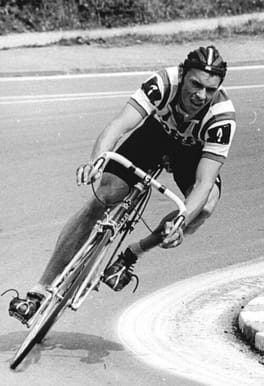
Photo: Jan Peter Kasper / CC BY-SA 3.0 de (source: Wikimedia Commons)
Uwe Ampler is credited as a sport cyclist. Uwe Ampler was born in Zerbst, Saxony-Anhalt, Germany on October 11, 1964. That works out to 61 years old in 2026. Awards on record include Patriotic Order of Merit in Gold and Star of People's Friendship. The listed height is 182 cm.
My Take
To me, Uwe Ampler embodies the glory and tragedy of East German cycling. An Olympic team time trial gold in Seoul 1988 and four Peace Race titles mark him as a genuine titan of the road. Yet his later doping admission casts a long shadow, and I cannot separate his achievements from the relentless machine of socialist-era sport that shaped him. What interests me most is that tension: the raw talent that propelled a small-town Saxony-Anhalt rider to the top, set against the moral compromises that followed. I respect the legs while questioning the system that drove them.
This take was written by generative AI, one per person, from publicly reported facts (editorial policy). It is a reading of the record, not reporting.
1. Profile
- Name (English)
- Uwe Ampler
- Name (Japanese)
- ウーヴェ・アンプラー
- Reading
- うーゔぇ・あんぷらー
- Born
- October 11, 1964 (age 61)
- Origin
- Zerbst, Saxony-Anhalt, Germany
- Height
- 182 cm
- Occupation
- sport cyclist
- Zodiac / Chinese zodiac
- Libra / Dragon
2. Background
Awards & achievements
- Patriotic Order of Merit in Gold
- Star of People's Friendship
3. Links
4. About this entry
Tags
- Last updated
Facts are limited to publicly available information up to 2024; non-public or unconfirmed items are omitted. English text is machine-assisted (facts translated by Sonnet, "My Take" written by Opus 4.8). The Japanese page is the source of record.
Frequently asked questions
When was Uwe Ampler born?
Born October 11, 1964 (age 61).
Where is Uwe Ampler from?
Uwe Ampler is from Zerbst, Saxony-Anhalt, Germany.
What does Uwe Ampler do?
Uwe Ampler works as sport cyclist.
How tall is Uwe Ampler?
Uwe Ampler is 182 cm.