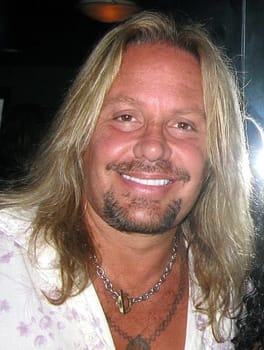
Photo: Paul.yuusuf at English Wikipedia / CC BY-SA 3.0 (source: Wikimedia Commons)
Vince Neil was born on February 8, 1961 in Hollywood, California, United States. Public records list Vince Neil as a singer and musician. The age as of 2026 is 65. Schooling on record includes Charter Oak High School.
My Take
Vince Neil is one of those voices you can't mistake for anyone else — that high, bleached-blond shriek cutting through the opening of "Shout at the Devil" or "Dr. Feelgood" is just instantly Mötley Crüe. Growing up in Hollywood, he helped build the Sunset Strip glam metal scene from the ground up starting in 1981, and honestly the band wouldn't have had half their swagger without him out front. Sure, his post-Crüe solo years were uneven and the weight fluctuations became tabloid fodder, but when he rejoined the guys and they did The Stadium Tour in 2022, I thought it was genuinely impressive that he still showed up and gave fans the spectacle they came for. He's not a saint — the 1984 DUI crash that killed Razzle is a real and tragic shadow over his legacy — but as a pure emblem of 80s excess and arena rock theater, Vince Neil is the genuine article.
This take was written by generative AI, one per person, from publicly reported facts (editorial policy). It is a reading of the record, not reporting.
1. Profile
- Name (English)
- Vince Neil
- Name (Japanese)
- ヴィンス・ニール
- Reading
- ゔぃんす・にーる
- Born
- February 8, 1961 (age 65)
- Origin
- Hollywood, California, United States
- Occupation
- singer / musician
- Zodiac / Chinese zodiac
- Aquarius / Ox
2. Background
- High school
- Charter Oak High School
3. Links
- Official sitehttp://www.vinceneil.net
- Instagramhttps://www.instagram.com/thevinceneil/
- Xhttps://x.com/thevinceneil
- Wikipedia (English)https://en.wikipedia.org/wiki/Vince%20Neil
- Wikipedia (Japanese)https://ja.wikipedia.org/wiki/%E3%83%B4%E3%82%A3%E3%83%B3%E3%82%B9%E3%83%BB%E3%83%8B%E3%83%BC%E3%83%AB
- Wikidatahttps://www.wikidata.org/wiki/Q362422
4. About this entry
Tags
- Last updated
Only publicly available facts are listed; non-public or unconfirmed items are omitted. Base data was compiled from Wikidata from June 2026 onward; ages are recalculated daily and deaths are checked against Wikidata on an ongoing basis. English text is machine-assisted (facts translated by Sonnet, "My Take" written by Opus 4.8). The Japanese page is the source of record.
Frequently asked questions
When was Vince Neil born?
Vince Neil was born on February 8, 1961 and is 65 years old.
Where is Vince Neil from?
Vince Neil is from Hollywood, California, United States.
What does Vince Neil do?
Vince Neil works as singer, musician.
Which high school did Vince Neil attend?
Vince Neil attended Charter Oak High School.
Singer — see all → · Musician — see all → · More people from the United States → · More people born on February 8 →