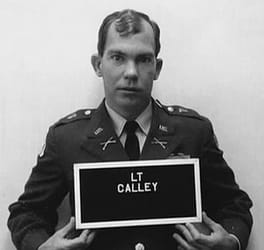
Photo: Unknown author / Public domain (source: Wikimedia Commons)
William Calley was listed as a military officer, gemologist and real-estate agent. William Calley was born on June 8, 1943 in Miami, Florida, United States. Death is recorded on April 28, 2024, at the age of 80. Schooling on record includes Miami Edison High School and Palm Beach State College.
My Take
William Calley is one of those figures I find genuinely hard to look away from, not because he's admirable but because his story cuts to the heart of what war does to people — and what accountability means in practice. He was a young guy from Miami, barely holding it together academically before the Army took him in as an officer, and then history handed him the worst kind of infamy: commander of the soldiers who carried out the My Lai massacre in 1968, killing hundreds of unarmed Vietnamese civilians. He was convicted of murder, sentenced to life, and then Nixon quietly put him under house arrest after three days. Three days. He eventually walked free, became a gemologist and real estate agent in Georgia, lived quietly for decades, and died in April 2024 at 80. My honest take? The man was a product of a system that failed at every level, but that doesn't absolve the choices made on that ground. He remains a mirror America still hasn't fully looked into.
This take was written by generative AI, one per person, from publicly reported facts (editorial policy). It is a reading of the record, not reporting.
1. Profile
- Name (English)
- William Calley
- Name (Japanese)
- ウィリアム・カリー
- Reading
- うぃりあむ・かりー
- Born
- June 8, 1943 – April 28, 2024
- Origin
- Miami, Florida, United States
- Occupation
- military officer / gemologist / real-estate agent
- Zodiac / Chinese zodiac
- Gemini / Goat
2. Background
- High school
- Miami Edison High School
- University
- Palm Beach State College
3. Links
4. About this entry
Tags
- Last updated
Only publicly available facts are listed; non-public or unconfirmed items are omitted. Base data was compiled from Wikidata from June 2026 onward; ages are recalculated daily and deaths are checked against Wikidata on an ongoing basis. English text is machine-assisted (facts translated by Sonnet, "My Take" written by Opus 4.8). The Japanese page is the source of record.
Frequently asked questions
When was William Calley born?
William Calley was born on June 8, 1943.
When did William Calley die?
William Calley died on April 28, 2024, aged 80.
Where was William Calley from?
William Calley was from Miami, Florida, United States.
What did William Calley do?
William Calley worked as military officer, gemologist, real-estate agent.
Where did William Calley study?
William Calley attended Palm Beach State College.
Military officer — see all → · More people from the United States → · More people born on June 8 →