The Genocidal Tomino: The Man Who Brought War to Robot Anime
In 1979, children gathered in front of their television sets expecting the usual: a giant robot, a clear-cut hero, evil defeated by the end of the episode. What they got instead was not a toy commercial. A boy was thrust into a war machine by the calculations of adults, and friend and foe alike died without ceremony. The blunt reality of war had poured into the living room.
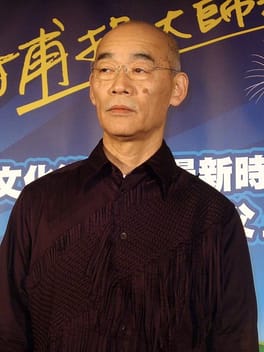
The man behind that story was Yoshiyuki Tomino. Born in Odawara, Kanagawa, he graduated from Nihon University's College of Art with a film degree, dreaming of live-action cinema. But the doors of the film studios were narrow, and the place that took him in was Mushi Production — Osamu Tezuka's castle. There, a journey spanning more than half a century, one nearly synonymous with the history of anime itself, began.
The Young Man Who Couldn't Be a Filmmaker
Tomino was born on November 5, 1941, in Odawara, Kanagawa. He graduated from Nihon University's College of Art in 1964, but the film industry of that era was deep in recession, with little room for an aspiring director to break in.
So he chose the newly founded Mushi Production instead. Working on Astro Boy as a director and scriptwriter, he entered the field not as an animator but as a "director." His dream of cinema seemed broken for a time — yet he would eventually make, through the medium of animation, the kind of "film" no one had ever made before.
Gundam, and the Invention of the "Real Robot"
In 1972 he directed his first TV series, Triton of the Sea. With 1977's Invincible Super Man Zambot 3, he began working on Sunrise productions, already smuggling the heavy theme of death in war into a children's program.
Then, in 1979, Mobile Suit Gundam began broadcasting. The robots were not invincible heroes but mass-produced "weapons." The protagonist was not a champion but an ordinary boy flung into a battlefield. The enemy had reasons, ideologies, and tears of their own. Overturning every convention of the giant-robot genre, the show gave birth to what would later be called the "real robot" genre and grew into one of Japan's defining franchises.
The Nickname "Genocidal Tomino"
You cannot discuss Tomino's work without one phrase: "the Genocidal Tomino." He killed off characters fans had grown to love, without mercy. In 1980's Space Runaway Ideon, that tendency swung to its absolute extreme.
Why go so far? Not for shock value. If you are going to depict war, death cannot be avoided. Beneath his work runs a genuine, sleepless worry about the future of humanity and society. His distinctive, clipped dialogue — what fans call "Tomino-go" — was itself a kind of invented language reflecting how he saw the world. In 1982 he changed his director credit to the name he is known by today, the name under which he would carve his place in history.
Past Eighty, and Still Pushing Forward
Mobile Suit Zeta Gundam in 1985, the theatrical Char's Counterattack in 1988, Turn A Gundam in 1999, and Gundam Reconguista in G in 2014 — he kept facing the vast story he had created across his entire life.
His achievements have been recognized at home and abroad. In 2009 he received the Honorary Leopard at the Locarno International Film Festival. In 2019 came the Agency for Cultural Affairs Commissioner's Commendation, and in 2021 he was named a Person of Cultural Merit. The young man who could not become a filmmaker had, through animation, written his name into the world's film festivals.
He wrote his own theme songs under the pen name Rin Ogaki, penned novels, and drew his own storyboards. Tomino wears many hats, but at the root of all of them lies one constant question: how is humanity going to go on living?
Into a field dismissed as mere toy advertising, he brought the hell of war and the darkness of the human soul. Past eighty and still working, still wrestling to leave something for the next generation, he is impossible to leave off any honest account of anime history. To tell that history without him would be talking in your sleep.