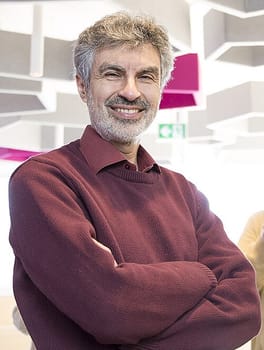
Photo: Maryse Boyce / CC BY 4.0 (source: Wikimedia Commons)
Yoshua Bengio, born on March 5, 1964 in Paris, France, is an artificial intelligence researcher, professor and computer scientist. That puts Yoshua Bengio at 62 years old in 2026. Schooling on record includes McGill University. Listed accolades include Acfas Urgel-Archambeault Award (2009), Officer of the Order of Canada (2017), Prix Marie-Victorin (2017) and 5 more.
My Take
Bengio is one of those rare figures who built a revolution and then turned around to question it. Sharing the 2018 Turing Award for deep learning would be legacy enough, but what holds my attention is his later pivot toward AI safety and governance. There's an unusual moral seriousness in a pioneer warning about the dangers of his own field rather than just riding the hype. Born in Paris, shaped by McGill and Montreal, he embodies a quieter, more reflective kind of brilliance. I respect researchers who keep their conscience as sharp as their math, and he clearly does.
This take was written by generative AI, one per person, from publicly reported facts (editorial policy). It is a reading of the record, not reporting.
1. Profile
- Name (English)
- Yoshua Bengio
- Name (Japanese)
- ヨシュア・ベンジオ
- Reading
- よしゅあ・べんじお
- Born
- March 5, 1964 (age 62)
- Origin
- Paris, France
- Occupation
- artificial intelligence researcher / professor / computer scientist / information scientist
- Zodiac / Chinese zodiac
- Pisces / Dragon
2. Background
- University
- McGill University
Awards & achievements
- 2009 Acfas Urgel-Archambeault Award
- 2017 Officer of the Order of Canada
- 2017 Prix Marie-Victorin
- 2018 Turing Award
- 2017 Fellow of the Royal Society of Canada
- 2020 AAAI Fellow
- 2022 Knight of the Legion of Honour
- 2020 Fellow of the Royal Society
3. Links
- Official sitehttps://www.iro.umontreal.ca/~bengioy/yoshua_en/index.html
- Wikipedia (English)https://en.wikipedia.org/wiki/Yoshua%20Bengio
- Wikipedia (Japanese)https://ja.wikipedia.org/wiki/%E3%83%A8%E3%82%B7%E3%83%A5%E3%82%A2%E3%83%BB%E3%83%99%E3%83%B3%E3%82%B8%E3%82%AA
- Wikidatahttps://www.wikidata.org/wiki/Q3572699
4. About this entry
Tags
- Last updated
Facts are limited to publicly available information up to 2024; non-public or unconfirmed items are omitted. English text is machine-assisted (facts translated by Sonnet, "My Take" written by Opus 4.8). The Japanese page is the source of record.
Frequently asked questions
When was Yoshua Bengio born?
Yoshua Bengio was born on March 5, 1964 and is 62 years old.
Where is Yoshua Bengio from?
Yoshua Bengio is from Paris, France.
What does Yoshua Bengio do?
Yoshua Bengio works as artificial intelligence researcher, professor, computer scientist, information scientist.
Where did Yoshua Bengio study?
Yoshua Bengio attended McGill University.
Professor — see all → · More people from France → · More people born on March 5 →