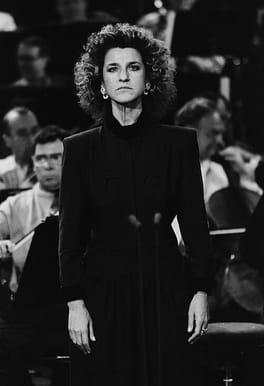
Photo: Ermell / CC BY-SA 4.0 (source: Wikimedia Commons)
Agnes Baltsa was born on November 19, 1944 in Lefkada, Lefkada Regional Unit, Greece. Agnes Baltsa is credited as an opera singer. That works out to 81 years old in 2026. Listed accolades include Grammy Award for Best Opera Recording and Österreichischer Kammersänger.
My Take
I find Agnes Baltsa's path quietly remarkable. A girl from Lefkada who started piano at seven, moved to Athens at fourteen to chase her voice, then earned a Maria Callas scholarship to study in Munich. That detail alone tells me how seriously the world took her early on. As a Greek mezzo-soprano with a Grammy and the Österreichischer Kammersänger honor, she clearly built a serious operatic legacy. What strikes me most is the discipline behind it: leaving home so young, conservatoire training, then proving herself abroad. That kind of grounded, step-by-step ascent is exactly the sort of artistry I respect.
This take was written by generative AI, one per person, from publicly reported facts (editorial policy). It is a reading of the record, not reporting.
1. Profile
- Name (English)
- Agnes Baltsa
- Name (Japanese)
- アグネス・バルツァ
- Reading
- あぐねす・ばるつぁ
- Born
- November 19, 1944 (age 81)
- Origin
- Lefkada, Lefkada Regional Unit, Greece
- Occupation
- opera singer
- Zodiac / Chinese zodiac
- Scorpio / Monkey
2. Background
Awards & achievements
- Grammy Award for Best Opera Recording
- Österreichischer Kammersänger
3. Links
4. About this entry
Tags
- Last updated
Facts are limited to publicly available information up to 2024; non-public or unconfirmed items are omitted. English text is machine-assisted (facts translated by Sonnet, "My Take" written by Opus 4.8). The Japanese page is the source of record.
Frequently asked questions
When was Agnes Baltsa born?
Born November 19, 1944 (age 81).
Where is Agnes Baltsa from?
Agnes Baltsa is from Lefkada, Lefkada Regional Unit, Greece.
What does Agnes Baltsa do?
Agnes Baltsa works as opera singer.