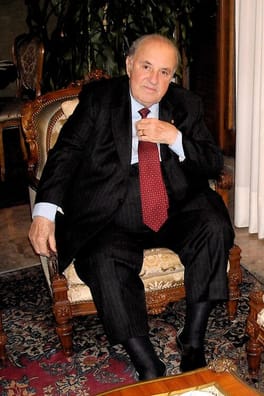
Photo: Pramzan45 / CC BY-SA 4.0 (source: Wikimedia Commons)
Carlo Bergonzi was born in Polesine Parmense, Province of Parma, Italy on July 13, 1924. Carlo Bergonzi was credited as an opera singer, pedagogue and musician. Death is recorded on July 25, 2014, at the age of 90. Listed accolades include Gramophone Award for Lifetime Achievement (2000), Knight Grand Cross of the Order of Merit of the Italian Republic and Ambrogino d'oro.
My Take
Bergonzi belongs to a vanishing breed of tenor who prized line and color over crowd-pleasing high notes. Born in the very province that produced Verdi, he seemed to carry that repertoire in his blood, even reviving the composer's neglected works. What I admire is the discipline of it: no theatrics, just a voice used like a finely tuned instrument, phrase after phrase. He stayed active into old age and taught the next generation before dying at ninety in 2014. I have enormous respect for artists who pursue mastery quietly rather than spectacle. His recordings remain a masterclass in taste.
This take was written by generative AI, one per person, from publicly reported facts (editorial policy). It is a reading of the record, not reporting.
1. Profile
- Name (English)
- Carlo Bergonzi
- Name (Japanese)
- カルロ・ベルゴンツィ
- Reading
- かるろ・べるごんつぃ
- Born
- July 13, 1924 – July 25, 2014
- Origin
- Polesine Parmense, Province of Parma, Italy
- Occupation
- opera singer / pedagogue / musician
- Zodiac / Chinese zodiac
- Cancer / Rat
2. Background
Awards & achievements
- 2000 Gramophone Award for Lifetime Achievement
- Knight Grand Cross of the Order of Merit of the Italian Republic
- Ambrogino d'oro
3. Links
- Official sitehttp://www.carlobergonzi.it
- Wikipedia (English)https://en.wikipedia.org/wiki/Carlo%20Bergonzi%20(tenor)
- Wikipedia (Japanese)https://ja.wikipedia.org/wiki/%E3%82%AB%E3%83%AB%E3%83%AD%E3%83%BB%E3%83%99%E3%83%AB%E3%82%B4%E3%83%B3%E3%83%84%E3%82%A3
- Wikidatahttps://www.wikidata.org/wiki/Q446670
4. About this entry
Tags
- Last updated
Facts are limited to publicly available information up to 2024; non-public or unconfirmed items are omitted. English text is machine-assisted (facts translated by Sonnet, "My Take" written by Opus 4.8). The Japanese page is the source of record.
Frequently asked questions
When was Carlo Bergonzi born?
Born July 13, 1924.
When did Carlo Bergonzi die?
Died July 25, 2014, aged 90.
Where was Carlo Bergonzi from?
Carlo Bergonzi was from Polesine Parmense, Province of Parma, Italy.
What did Carlo Bergonzi do?
Carlo Bergonzi worked as opera singer, pedagogue, musician.
Opera singer — see all → · Pedagogue — see all → · More people from Italy →