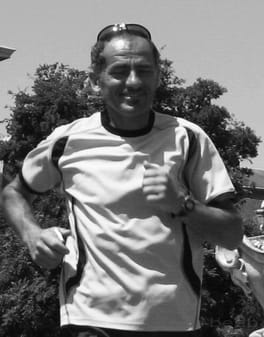
Photo: Bercese / CC BY-SA 4.0 (source: Wikimedia Commons)
Yiannis Kouros is credited as a poet, ultramarathon runner and songwriter. Yiannis Kouros was born on February 13, 1956 in Tripoli, Arcadia Regional Unit, Greece. The age as of 2026 is 70. Education on record includes La Trobe University.
My Take
Yiannis Kouros is, to me, one of the most extraordinary athletes the endurance world has ever produced. Holding world records from 100 miles all the way to 1,000, he turned suffering into something closer to art. What truly moves me is that he is also a poet and songwriter, and that he once played Pheidippides on screen. A Greek man literally re-enacting the ancient messenger's run feels almost mythic. He did not just rack up distance records; he treated running as a form of expression. I hold deep admiration for someone who fused physical extremity with genuine artistry.
This take was written by generative AI, one per person, from publicly reported facts (editorial policy). It is a reading of the record, not reporting.
1. Profile
- Name (English)
- Yiannis Kouros
- Name (Japanese)
- ヤニス・クロス
- Reading
- やにす・くろす
- Born
- February 13, 1956 (age 70)
- Origin
- Tripoli, Arcadia Regional Unit, Greece
- Occupation
- poet / ultramarathon runner / songwriter / athletics competitor / marathon runner
- Zodiac / Chinese zodiac
- Aquarius / Monkey
2. Background
- University
- La Trobe University
3. Links
4. About this entry
Tags
- Last updated
Facts are limited to publicly available information up to 2024; non-public or unconfirmed items are omitted. English text is machine-assisted (facts translated by Sonnet, "My Take" written by Opus 4.8). The Japanese page is the source of record.
Frequently asked questions
When was Yiannis Kouros born?
Born February 13, 1956 (age 70).
Where is Yiannis Kouros from?
Yiannis Kouros is from Tripoli, Arcadia Regional Unit, Greece.
What does Yiannis Kouros do?
Yiannis Kouros works as poet, ultramarathon runner, songwriter, athletics competitor, marathon runner.