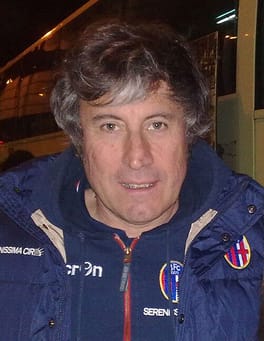
Photo: Original: Gigidelneri Derivative work: Danyele / CC BY-SA 3.0 (source: Wikimedia Commons)
Alberto Malesani is an association football player and association football coach. Alberto Malesani was born on June 5, 1954 in Verona, Province of Verona, Italy. The age as of 2026 is 72. The listed height is 179 cm.
My Take
Alberto Malesani is a manager I have a real soft spot for. The Verona-born former player is best remembered for an extraordinary spell at Parma in the late 1990s, lifting the Coppa Italia, the UEFA Cup, and the Supercoppa Italiana with what was, on paper, a mid-tier club. Taking a side like that and turning it into European winners is no small feat, and it speaks to a coach who could squeeze the maximum from a roster. Italian managers are often caricatured as cautious tacticians, but Malesani's reputation leans attacking and fiery. I am partial to that brand of passionate, expressive coaching.
This take was written by generative AI, one per person, from publicly reported facts (editorial policy). It is a reading of the record, not reporting.
1. Profile
- Name (English)
- Alberto Malesani
- Name (Japanese)
- アルベルト・マレザーニ
- Reading
- あるべると・まれざーに
- Born
- June 5, 1954 (age 72)
- Origin
- Verona, Province of Verona, Italy
- Height
- 179 cm
- Occupation
- association football player / association football coach
- Zodiac / Chinese zodiac
- Gemini / Horse
2. Links
3. About this entry
Tags
- Last updated
Facts are limited to publicly available information up to 2024; non-public or unconfirmed items are omitted. English text is machine-assisted (facts translated by Sonnet, "My Take" written by Opus 4.8). The Japanese page is the source of record.
Frequently asked questions
When was Alberto Malesani born?
Born June 5, 1954 (age 72).
Where is Alberto Malesani from?
Alberto Malesani is from Verona, Province of Verona, Italy.
What does Alberto Malesani do?
Alberto Malesani works as association football player, association football coach.
How tall is Alberto Malesani?
Alberto Malesani is 179 cm.
Association football player — see all → · Association football coach — see all → · More people from Italy →