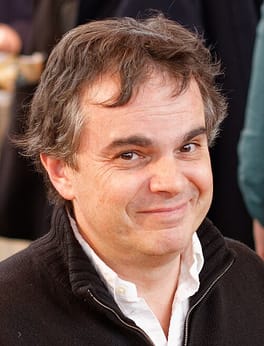
Photo: Pierre-Yves Beaudouin / CC BY-SA 3.0 (source: Wikimedia Commons)
Born on April 14, 1965 in Neuilly-sur-Seine, Hauts-de-Seine, France, Alexandre Jardin is a film producer, novelist and screenwriter. That puts Alexandre Jardin at 61 years old in 2026. Listed accolades include Prix Femina (1988), Prix du Premier Roman (1986) and prix Trop Virilo (2017). Credited works include Fanfan and Des gens très bien.
My Take
What strikes me about Alexandre Jardin is how completely he refuses to stay in one lane. Winning the Prix Femina in his early twenties for Le Zebre would be enough for most writers, yet he kept moving between novels, screenplays, and the director's chair. I read that as someone who needs to control a story from first sentence to final frame. There is a charm in the way French literary prestige and breezy commercial appeal coexist in his work without apology. I find that rare and genuinely appealing, and I respect a writer confident enough to entertain while still chasing real prizes.
This take was written by generative AI, one per person, from publicly reported facts (editorial policy). It is a reading of the record, not reporting.
1. Profile
- Name (English)
- Alexandre Jardin
- Name (Japanese)
- アレクサンドル・ジャルダン
- Reading
- あれくさんどる・じゃるだん
- Born
- April 14, 1965 (age 61)
- Origin
- Neuilly-sur-Seine, Hauts-de-Seine, France
- Occupation
- film producer / novelist / screenwriter / writer / film director
- Zodiac / Chinese zodiac
- Aries / Snake
2. Background
Awards & achievements
- 1988 Prix Femina
- 1986 Prix du Premier Roman
- 2017 prix Trop Virilo
3. Works & records
Filmography / notable works
| Category | Title |
|---|---|
| Notable work | Fanfan |
| Notable work | Des gens très bien |
4. Links
- Official sitehttps://alexandrejardin.com/
- Xhttps://x.com/AlexandreJardin
- Wikipedia (English)https://en.wikipedia.org/wiki/Alexandre%20Jardin
- Wikipedia (Japanese)https://ja.wikipedia.org/wiki/%E3%82%A2%E3%83%AC%E3%82%AF%E3%82%B5%E3%83%B3%E3%83%89%E3%83%AB%E3%83%BB%E3%82%B8%E3%83%A3%E3%83%AB%E3%83%80%E3%83%B3
- Wikidatahttps://www.wikidata.org/wiki/Q982361
5. About this entry
Tags
- Last updated
Facts are limited to publicly available information up to 2024; non-public or unconfirmed items are omitted. English text is machine-assisted (facts translated by Sonnet, "My Take" written by Opus 4.8). The Japanese page is the source of record.
Frequently asked questions
When was Alexandre Jardin born?
Born April 14, 1965 (age 61).
Where is Alexandre Jardin from?
Alexandre Jardin is from Neuilly-sur-Seine, Hauts-de-Seine, France.
What does Alexandre Jardin do?
Alexandre Jardin works as film producer, novelist, screenwriter, writer, film director.
What is Alexandre Jardin known for?
Notable works include Fanfan, Des gens très bien.
Film producer — see all → · Novelist — see all → · More people from France →