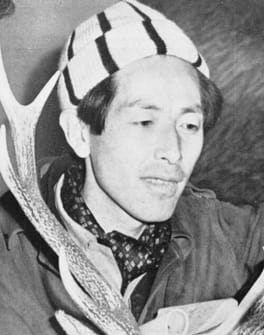
Photo: 映画評論社 / Public domain (source: Wikimedia Commons)
My Take
I can't watch a Kinji Fukasaku movie without feeling like the screen might actually catch fire. Born in 1930 in rural Ibaraki, he came up through the wartime generation, and you can feel that scorched-earth fury baked into everything he shot. The man basically reinvented the yakuza picture with Battles Without Honor and Humanity, trading clean honor codes for handheld chaos, ugly betrayals, and a camera that won't sit still. He's got the awards and the honors, sure, but I never think of him as some tidy elder statesman. I think of a snarling lone wolf who kept clawing at the frame his whole life. And then there's Battle Royale, made in his seventies, mean and unhinged and weirdly tender. Few directors go out that loud. I miss him.
This take was written by generative AI, one per person, from publicly reported facts (editorial policy). It is a reading of the record, not reporting.
Overview
Kinji Fukasaku (1930–2003) was a Japanese film director, screenwriter, producer, and actor, born in Midorioka Village, Ibaraki Prefecture. A graduate of Nihon University, he built a career spanning several decades and became one of Japan's most distinctive and visceral filmmakers, known for raw, kinetic crime and action dramas. He received the Japan Academy Prize for Best Director twice (1983 and 1987), the Blue Ribbon Award for Best Director twice (1976 and 1983), and was honored with the Purple Ribbon Medal in 1997.
1. Profile
- Name (English)
- Kinji Fukasaku
- Name (Japanese)
- 深作欣二
- Reading
- ふかさく きんじ
- Born
- July 3, 1930 – January 12, 2003
- Origin
- Midorioka Village, Ibaraki Prefecture, Japan
- Occupation
- Film Director / Screenwriter / Film Producer / Actor
- Zodiac / Chinese zodiac
- Cancer / Horse
- Active years
- 1961 - 2003
2. Background
- University
- Nihon University
Awards & achievements
- Japan Academy Prize (year unknown)
- Japan Academy Prize for Best Director (1983)
- Japan Academy Prize for Best Director (1987)
- Blue Ribbon Award for Best Director (1976)
- Blue Ribbon Award for Best Director (1983)
- Purple Ribbon Medal (1997)
- Nikkan Sports Film Award for Best Director (1994)
- Nikkan Sports Film Award for Best Director (1999)
3. Relationships
- Spouse
- 中原早苗
4. Works & records
Works summary
- Appearances
- 117 (1961–2003)
- By year
- 1961: 3, 1962: 2, 1963: 1, 1964: 2, 1965: 2, 1966: 3, 1967: 2, 1968: 6, 1969: 2, 1970: 3, 1971: 5, 1972: 5, 1973: 5, 1974: 8, 1975: 7, 1976: 3, 1977: 5, 1978: 4, 1979: 1, 1980: 2, 1981: 4, 1982: 5, 1983: 3, 1984: 2, 1985: 1, 1986: 1, 1987: 1, 1988: 1, 1990: 2, 1992: 1, 1994: 2, 1995: 1, 1997: 1, 1999: 1, 2000: 1, 2001: 1, 2002: 1, 2003: 1
- Debut work
- 風来坊探偵シリーズ
Filmography / notable works
| Category | Title | Year |
|---|---|---|
| Film | バトル・ロワイアルII 鎮魂歌 | 2003 |
| ドラマ・ドキュメンタリー・ゲーム | クロックタワー3 | 2002 |
| Film | バトル・ロワイアル【特別篇】 | 2001 |
| Film | バトル・ロワイアル | 2000 |
| Film | おもちゃ | 1999 |
| ドラマ・ドキュメンタリー・ゲーム | 20世紀末黙示録 もの食う人びと | 1997 |
| TV movie | 阿部一族 | 1995 |
| Film | 忠臣蔵外伝 四谷怪談 | 1994 |
| Appearance | RAMPO 奥山バージョン | 1994 |
| Film | いつかギラギラする日 | 1992 |
| TV movie | ダブル・パニック'90 ロス警察大捜査線 | 1990 |
| 企画・監修 | リメインズ 美しき勇者たち | 1990 |
| Film | 華の乱 | 1988 |
| Film | 必殺4 恨みはらします | 1987 |
| Film | 火宅の人 | 1986 |
| 企画・監修 | 酔いどれ公爵 | 1985 |
| Film | 上海バンスキング | 1984 |
| 企画・監修 | 1984年3月24日 | 1984 |
| Film | 人生劇場 | 1983 |
| Film | 里見八犬伝 | 1983 |
| 企画・監修 | 1983年3月25日 | 1983 |
| Film | 道頓堀川 | 1982 |
| Film | 蒲田行進曲 | 1982 |
| TV movie | 吾輩は人喰猫である | 1982 |
| TV movie | 黒い館の女 | 1982 |
| 企画・監修 | 1982年8月7日 | 1982 |
| Film | 青春の門 | 1981 |
| Film | 魔界転生 | 1981 |
| TV movie | 眼には眼を | 1981 |
| Theater | 柳生十兵衛 魔界転生 | 1981 |
| Film | 仁義なき戦い 総集篇 | 1980 |
| Film | 復活の日 | 1980 |
| Appearance | やわ肌の秘密 | 1979 |
| Film | 柳生一族の陰謀 | 1978 |
| Film | 宇宙からのメッセージ | 1978 |
| Film | 赤穂城断絶 | 1978 |
| TV movie | 将軍毒殺 | 1978 |
| Film | 北陸代理戦争 | 1977 |
| Film | ドーベルマン刑事 | 1977 |
| TV movie | '77元旦 デカ部屋ぶっ飛ぶ! | 1977 |
| Theater | バラエティショウ ピラニア十六匹大行進 ピラニア軍団公演 | 1977 |
| Appearance | 人間の証明 | 1977 |
| Film | 新仁義なき戦い 組長最後の日 | 1976 |
| Film | 暴走パニック 大激突 | 1976 |
| Film | やくざの墓場 くちなしの花 | 1976 |
| Film | 新仁義なき戦い 組長の首 | 1975 |
| Film | 仁義の墓場 | 1975 |
| Film | 県警対組織暴力 | 1975 |
| Film | 資金源強奪 | 1975 |
| TV movie | 濡れた女の殺し節 | 1975 |
| TV movie | Gメン皆殺しの予告 | 1975 |
| TV movie | 背番号3長島対Gメン | 1975 |
| Film | 仁義なき戦い 頂上作戦 | 1974 |
| Film | 仁義なき戦い 完結篇 | 1974 |
| Film | 新仁義なき戦い | 1974 |
| TV movie | 連続ピストル強盗団 | 1974 |
| TV movie | 傷だらけの天使 | 1974 |
| TV movie | 宝石泥棒に子守唄を | 1974 |
| TV movie | ヌードダンサーに愛の炎を | 1974 |
| Theater | 仁義なき戦い 金子信雄プロデュース新演劇公演 | 1974 |
5. Links
- Wikipedia (Japanese)https://ja.wikipedia.org/wiki/%E6%B7%B1%E4%BD%9C%E6%AC%A3%E4%BA%8C
- Wikidatahttps://www.wikidata.org/wiki/Q470779
6. About this entry
Tags
- Last updated
Facts are limited to publicly available information up to 2024; non-public or unconfirmed items are omitted. Works and profile fields sourced from Wikipedia reflect content as of 2026-08-26. English text is machine-assisted (facts translated by Sonnet, "My Take" written by Opus 4.8). The Japanese page is the source of record.
Frequently asked questions
When was Kinji Fukasaku born?
Born July 3, 1930.
When did Kinji Fukasaku die?
Died January 12, 2003, aged 72.
Where was Kinji Fukasaku from?
Kinji Fukasaku was from Midorioka Village, Ibaraki Prefecture, Japan.
What did Kinji Fukasaku do?
Kinji Fukasaku worked as Film Director, Screenwriter, Film Producer, Actor.
When was Kinji Fukasaku active?
1961 - 2003.
What was Kinji Fukasaku known for?
Notable works include バトル・ロワイアルII 鎮魂歌, クロックタワー3, バトル・ロワイアル【特別篇】.
Film Director — see all → · Screenwriter — see all → · More people from Japan →