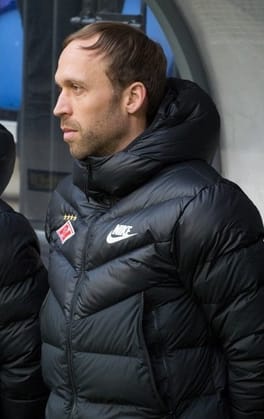
Photo: Екатерина Лаут / CC BY-SA 3.0 (source: Wikimedia Commons)
Public records list Andreas Hinkel as an association football player and association football coach. Andreas Hinkel was born in Backnang, Stuttgart Government Region, Germany on March 26, 1982. That works out to 44 years old in 2026. The listed height is 183 cm.
My Take
Andreas Hinkel is exactly the kind of right-back I find easy to root for. Born in Backnang, he broke through at VfB Stuttgart in 2000, balanced attacking overlaps with defensive steel, won 21 caps for Germany, and tested himself abroad with Sevilla in La Liga. The relentless up-and-down work on the flank rarely earns headlines, but it is the engine of any good team. That he moved into coaching afterward suggests a thoughtful, tactically literate mind. I quietly applaud players like Hinkel who do the unglamorous running so others can shine, season after season, without complaint.
This take was written by generative AI, one per person, from publicly reported facts (editorial policy). It is a reading of the record, not reporting.
1. Profile
- Name (English)
- Andreas Hinkel
- Name (Japanese)
- アンドレアス・ヒンケル
- Reading
- あんどれあす・ひんける
- Born
- March 26, 1982 (age 44)
- Origin
- Backnang, Stuttgart Government Region, Germany
- Height
- 183 cm
- Occupation
- association football player / association football coach
- Zodiac / Chinese zodiac
- Aries / Dog
2. Links
3. About this entry
Tags
- Last updated
Facts are limited to publicly available information up to 2024; non-public or unconfirmed items are omitted. English text is machine-assisted (facts translated by Sonnet, "My Take" written by Opus 4.8). The Japanese page is the source of record.
Frequently asked questions
When was Andreas Hinkel born?
Born March 26, 1982 (age 44).
Where is Andreas Hinkel from?
Andreas Hinkel is from Backnang, Stuttgart Government Region, Germany.
What does Andreas Hinkel do?
Andreas Hinkel works as association football player, association football coach.
How tall is Andreas Hinkel?
Andreas Hinkel is 183 cm.
Association football player — see all → · Association football coach — see all → · More people from Germany →