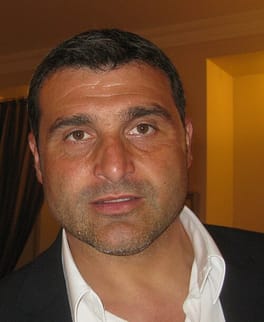
Photo: User:Mbx / CC BY-SA 3.0 (source: Wikimedia Commons)
Angelo Peruzzi, born on February 16, 1970 in Blera, Province of Viterbo, Italy, is an association football player and association football coach. As of 2026, Angelo Peruzzi is 56 years old. Recorded honors include Gold Collar for Sports Merit and Officer of the Order of Merit of the Italian Republic (2006). The listed height is 180 cm.
My Take
Angelo Peruzzi is, for my money, one of the most underrated goalkeepers Italy ever produced, and that's saying something in a country obsessed with the position. Three-time Serie A Goalkeeper of the Year, a Juventus and Lazio stalwart, he had cat-quick reflexes despite a stockier frame than the textbook keeper. The cruel irony is that he peaked in the Buffon and Pagliuca era, so caps never matched his quality. He's Italian, born near Viterbo in 1970. Pundits rank him among Italy's greatest, and I think the wider football world still sleeps on him.
This take was written by generative AI, one per person, from publicly reported facts (editorial policy). It is a reading of the record, not reporting.
1. Profile
- Name (English)
- Angelo Peruzzi
- Name (Japanese)
- アンジェロ・ペルッツィ
- Reading
- あんじぇろ・ぺるっつぃ
- Born
- February 16, 1970 (age 56)
- Origin
- Blera, Province of Viterbo, Italy
- Height
- 180 cm
- Occupation
- association football player / association football coach
- Zodiac / Chinese zodiac
- Aquarius / Dog
2. Background
Awards & achievements
- Gold Collar for Sports Merit
- 2006 Officer of the Order of Merit of the Italian Republic
3. Links
4. About this entry
Tags
- Last updated
Facts are limited to publicly available information up to 2024; non-public or unconfirmed items are omitted. English text is machine-assisted (facts translated by Sonnet, "My Take" written by Opus 4.8). The Japanese page is the source of record.
Frequently asked questions
When was Angelo Peruzzi born?
Angelo Peruzzi was born on February 16, 1970 and is 56 years old.
Where is Angelo Peruzzi from?
Angelo Peruzzi is from Blera, Province of Viterbo, Italy.
What does Angelo Peruzzi do?
Angelo Peruzzi works as association football player, association football coach.
How tall is Angelo Peruzzi?
Angelo Peruzzi is 180 cm tall.
Association football player — see all → · Association football coach — see all → · More people from Italy → · More people born on February 16 →