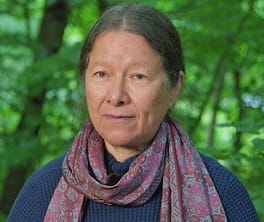
Photo: Aarhus Universitet / CC BY 3.0 (source: Wikimedia Commons)
Anna Tsing is an anthropologist and university teacher. The date of birth on record is October 20, 1952. Anna Tsing is 73 years old as of 2026. Education on record includes Yale University. Listed accolades include Guggenheim Fellowship (2010), Huxley Memorial Medal (2018) and Honorary doctor of the University of Liège (2021).
My Take
Anna Tsing rewired how I think about scholarship. With The Mushroom at the End of the World, she took a single foraged fungus growing in ruined, post-industrial forests and spun it into a meditation on survival inside capitalism's wreckage. That is anthropology as poetry. A Chinese-American thinker trained at Yale and based at UC Santa Cruz, decorated with a Guggenheim, the Huxley Medal, and an honorary doctorate, she has the credentials, but it is her imagination that stays with me. She makes the small and overlooked feel cosmically important, and I came away looking at the ground beneath my feet with a little more tenderness.
This take was written by generative AI, one per person, from publicly reported facts (editorial policy). It is a reading of the record, not reporting.
1. Profile
- Name (English)
- Anna Tsing
- Name (Japanese)
- アナ・チン
- Reading
- あな・ちん
- Born
- October 20, 1952 (age 73)
- Occupation
- anthropologist / university teacher
- Zodiac / Chinese zodiac
- Libra / Dragon
2. Background
- University
- Yale University
Awards & achievements
- 2010 Guggenheim Fellowship
- 2018 Huxley Memorial Medal
- 2021 Honorary doctor of the University of Liège
3. Works & records
Filmography / notable works
| Category | Title |
|---|---|
| Notable work | The Mushroom at the End of the World |
4. Links
- Wikipedia (English)https://en.wikipedia.org/wiki/Anna%20Tsing
- Wikipedia (Japanese)https://ja.wikipedia.org/wiki/%E3%82%A2%E3%83%8A%E3%83%BB%E3%83%81%E3%83%B3
- Wikidatahttps://www.wikidata.org/wiki/Q21821411
5. About this entry
Tags
- Last updated
Facts are limited to publicly available information up to 2024; non-public or unconfirmed items are omitted. English text is machine-assisted (facts translated by Sonnet, "My Take" written by Opus 4.8). The Japanese page is the source of record.
Frequently asked questions
When was Anna Tsing born?
Born October 20, 1952 (age 73).
What does Anna Tsing do?
Anna Tsing works as anthropologist, university teacher.
What is Anna Tsing known for?
Notable works include The Mushroom at the End of the World.