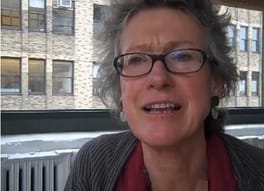
Photo: Mssemantics, Photo courtesy of WNYC / CC BY 4.0 (source: Wikimedia Commons)
Arlie Russell Hochschild was born in Boston, Massachusetts, United States on January 15, 1940. Public records list Arlie Russell Hochschild as a sociologist, university teacher and writer. The age as of 2026 is 86. Education on record includes Swarthmore College. Awards on record include Guggenheim Fellowship (1976), Jessie Bernard Award (2008) and Helmholtz Medal (2024).
My Take
Arlie Russell Hochschild is one of those thinkers whose ideas quietly seep into everyday language. She gave us "the second shift" and "emotional labor" through The Managed Heart, and I appreciate how she took something invisible, the work of managing your own feelings on the job, and made it impossible to unsee. A Berkeley sociologist focused on the emotions beneath our moral and social lives, she's collected honors from a Guggenheim to the 2024 Helmholtz Medal. What I admire most is the longevity: she's still being recognized in her eighties, proof that careful, humane observation ages better than any trend.
This take was written by generative AI, one per person, from publicly reported facts (editorial policy). It is a reading of the record, not reporting.
1. Profile
- Name (English)
- Arlie Russell Hochschild
- Name (Japanese)
- アーリー・ラッセル・ホックシールド
- Reading
- あーりー・らっせる・ほっくしーるど
- Born
- January 15, 1940 (age 86)
- Origin
- Boston, Massachusetts, United States
- Occupation
- sociologist / university teacher / writer / psychologist
- Zodiac / Chinese zodiac
- Capricorn / Dragon
2. Background
- University
- Swarthmore College
Awards & achievements
- 1976 Guggenheim Fellowship
- 2008 Jessie Bernard Award
- 2024 Helmholtz Medal
3. Works & records
Filmography / notable works
| Category | Title |
|---|---|
| Notable work | The Second Shift |
| Notable work | The Managed Heart |
4. Links
- Wikipedia (English)https://en.wikipedia.org/wiki/Arlie%20Russell%20Hochschild
- Wikipedia (Japanese)https://ja.wikipedia.org/wiki/%E3%82%A2%E3%83%BC%E3%83%AA%E3%83%BC%E3%83%BB%E3%83%A9%E3%83%83%E3%82%BB%E3%83%AB%E3%83%BB%E3%83%9B%E3%83%83%E3%82%AF%E3%82%B7%E3%83%BC%E3%83%AB%E3%83%89
- Wikidatahttps://www.wikidata.org/wiki/Q531128
5. About this entry
Tags
- Last updated
Facts are limited to publicly available information up to 2024; non-public or unconfirmed items are omitted. English text is machine-assisted (facts translated by Sonnet, "My Take" written by Opus 4.8). The Japanese page is the source of record.
Frequently asked questions
When was Arlie Russell Hochschild born?
Born January 15, 1940 (age 86).
Where is Arlie Russell Hochschild from?
Arlie Russell Hochschild is from Boston, Massachusetts, United States.
What does Arlie Russell Hochschild do?
Arlie Russell Hochschild works as sociologist, university teacher, writer, psychologist.
What is Arlie Russell Hochschild known for?
Notable works include The Second Shift, The Managed Heart.
Sociologist — see all → · University teacher — see all → · More people from the United States →