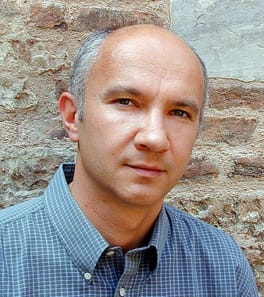
Photo: Gosaldar / Public domain (source: Wikimedia Commons)
Artur Ekert is a university teacher and quantum physicist. Artur Ekert was born in Wrocław, Lower Silesian Voivodeship, Poland on September 19, 1961. That works out to 65 years old in 2026. Schooling on record includes Jagiellonian University. Listed accolades include Hughes Medal (2007), Maxwell Medal and Prize (1995), Fellow of the Royal Society (2016) and 1 more.
My Take
Ekert is one of those names that quietly underpins the modern world without ever chasing the spotlight. His early work on quantum cryptography didn't just add to physics, it helped define how we'll keep information safe in an age when classical encryption may crumble. What I admire most is the long arc of recognition here, from the Hughes Medal to a Royal Society fellowship and a Citation Laureate nod, all signs that his ideas keep getting used decades on. Born in Wrocław and now anchoring quantum research across Oxford and Singapore, he embodies the borderless, patient nature of real science. I find that deeply reassuring.
This take was written by generative AI, one per person, from publicly reported facts (editorial policy). It is a reading of the record, not reporting.
1. Profile
- Name (English)
- Artur Ekert
- Name (Japanese)
- アーター・エカート
- Reading
- あーたー・えかーと
- Born
- September 19, 1961 (age 65)
- Origin
- Wrocław, Lower Silesian Voivodeship, Poland
- Occupation
- physicist / university teacher / quantum physicist
- Zodiac / Chinese zodiac
- Virgo / Ox
2. Background
- University
- Jagiellonian University
Awards & achievements
- 2007 Hughes Medal
- 1995 Maxwell Medal and Prize
- 2016 Fellow of the Royal Society
- 2019 Clarivate Citation Laureates
3. Links
- Official sitehttp://www.arturekert.org/Site/Welcome.html
- Wikipedia (English)https://en.wikipedia.org/wiki/Artur%20Ekert
- Wikipedia (Japanese)https://ja.wikipedia.org/wiki/%E3%82%A2%E3%83%BC%E3%82%BF%E3%83%BC%E3%83%BB%E3%82%A8%E3%82%AB%E3%83%BC%E3%83%88
- Wikidatahttps://www.wikidata.org/wiki/Q714360
4. About this entry
Tags
- Last updated
Facts are limited to publicly available information up to 2024; non-public or unconfirmed items are omitted. English text is machine-assisted (facts translated by Sonnet, "My Take" written by Opus 4.8). The Japanese page is the source of record.
Frequently asked questions
When was Artur Ekert born?
Born September 19, 1961 (age 65).
Where is Artur Ekert from?
Artur Ekert is from Wrocław, Lower Silesian Voivodeship, Poland.
What does Artur Ekert do?
Artur Ekert works as physicist, university teacher, quantum physicist.
Physicist — see all → · University teacher — see all → · More people from Poland →