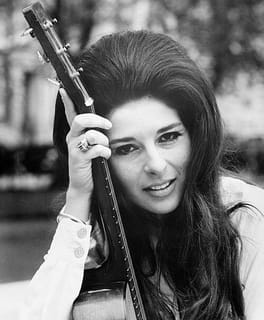
Photo: Capitol Records / Public domain (source: Wikimedia Commons)
Bobbie Gentry was born in Woodland, Mississippi, United States on July 27, 1942. Public records list Bobbie Gentry as a singer, banjoist and singer-songwriter. That works out to 84 years old in 2026. Schooling on record includes University of California, Los Angeles. Awards on record include Grammy Award for Best New Artist (1968).
My Take
What fascinates me most about Bobbie Gentry is not the Grammy or even Ode to Billie Joe — it is the exit. Here was a woman from rural Mississippi who wrote, composed, and produced her own material at a time when the industry barely let women near the controls, and then, at the height of her fame, she simply walked away. That combination of Southern Gothic storytelling and total self-possession makes her one of pop history's great enigmas. Every artist chasing constant relevance could learn from her: sometimes the most powerful statement is silence. I count her among the most quietly radical figures in American music.
This take was written by generative AI, one per person, from publicly reported facts (editorial policy). It is a reading of the record, not reporting.
1. Profile
- Name (English)
- Bobbie Gentry
- Name (Japanese)
- ボビー・ジェントリー
- Reading
- ぼびー・じぇんとりー
- Born
- July 27, 1942 (age 84)
- Origin
- Woodland, Mississippi, United States
- Occupation
- singer / banjoist / singer-songwriter / musician / composer
- Zodiac / Chinese zodiac
- Leo / Horse
2. Background
- University
- University of California, Los Angeles
Awards & achievements
- 1968 Grammy Award for Best New Artist
3. Links
- Official sitehttps://www.bobbiegentry.org.uk/
- Wikipedia (English)https://en.wikipedia.org/wiki/Bobbie%20Gentry
- Wikidatahttps://www.wikidata.org/wiki/Q272253
4. About this entry
Tags
- Last updated
Facts are limited to publicly available information up to 2024; non-public or unconfirmed items are omitted. English text is machine-assisted (facts translated by Sonnet, "My Take" written by Opus 4.8). The Japanese page is the source of record.
Frequently asked questions
When was Bobbie Gentry born?
Born July 27, 1942 (age 84).
Where is Bobbie Gentry from?
Bobbie Gentry is from Woodland, Mississippi, United States.
What does Bobbie Gentry do?
Bobbie Gentry works as singer, banjoist, singer-songwriter, musician, composer.
Singer — see all → · Banjoist — see all → · More people from the United States →