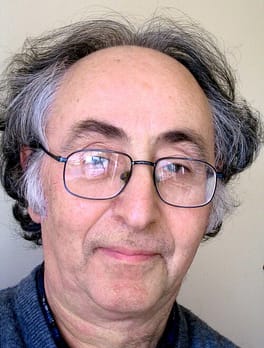
Photo: Brian Josephson / CC BY 3.0 (source: Wikimedia Commons)
Brian David Josephson was born on January 4, 1940 in Cardiff, United Kingdom and is credited as a physicist and university teacher. As of 2026, Brian David Josephson is 86 years old. Education on record includes Cardiff High School and Trinity College. Awards on record include Fellow of the Royal Society, Nobel Prize in Physics (1973), Elliott Cresson Medal (1972) and 5 more. Credited works include Josephson effect.
My Take
Brian Josephson fascinates me because he made his defining discovery as a Cambridge PhD student in 1962, predicting what became the Josephson effect, and won the Nobel Prize in Physics in 1973 while still remarkably young. The medals stacked up early: the Fritz London Award, the Hughes Medal, the Elliott Cresson Medal. What I find compelling is that a single insight from a student reshaped superconductivity and underpins technology we still rely on. A Fellow of the Royal Society and longtime Cambridge professor, he represents to me the rare case where one elegant idea, arrived at young, defines an entire career. I'd love to know what drove that early leap.
This take was written by generative AI, one per person, from publicly reported facts (editorial policy). It is a reading of the record, not reporting.
1. Profile
- Name (English)
- Brian David Josephson
- Name (Japanese)
- ブライアン・ジョゼフソン
- Reading
- ぶらいあん・じょぜふそん
- Born
- January 4, 1940 (age 86)
- Origin
- Cardiff, United Kingdom
- Occupation
- physicist / university teacher
- Zodiac / Chinese zodiac
- Capricorn / Dragon
2. Background
- High school
- Cardiff High School
- University
- Trinity College
Awards & achievements
- Fellow of the Royal Society
- 1973 Nobel Prize in Physics
- 1972 Elliott Cresson Medal
- 1973 Holweck Prize
- 1972 Hughes Medal
- 1982 Faraday Medal
- 1970 Fritz London Award
- Fellow of the Institute of Physics
3. Works & records
Filmography / notable works
| Category | Title |
|---|---|
| Notable work | Josephson effect |
4. Links
- Official sitehttps://www.tcm.phy.cam.ac.uk/~bdj10/
- Wikipedia (English)https://en.wikipedia.org/wiki/Brian%20Josephson
- Wikipedia (Japanese)https://ja.wikipedia.org/wiki/%E3%83%96%E3%83%A9%E3%82%A4%E3%82%A2%E3%83%B3%E3%83%BB%E3%82%B8%E3%83%A7%E3%82%BC%E3%83%95%E3%82%BD%E3%83%B3
- Wikidatahttps://www.wikidata.org/wiki/Q181363
5. About this entry
Tags
- Last updated
Facts are limited to publicly available information up to 2024; non-public or unconfirmed items are omitted. English text is machine-assisted (facts translated by Sonnet, "My Take" written by Opus 4.8). The Japanese page is the source of record.
Frequently asked questions
When was Brian David Josephson born?
Born January 4, 1940 (age 86).
Where is Brian David Josephson from?
Brian David Josephson is from Cardiff, United Kingdom.
What does Brian David Josephson do?
Brian David Josephson works as physicist, university teacher.
What is Brian David Josephson known for?
Notable works include Josephson effect.
Physicist — see all → · University teacher — see all → · More people from the United Kingdom →