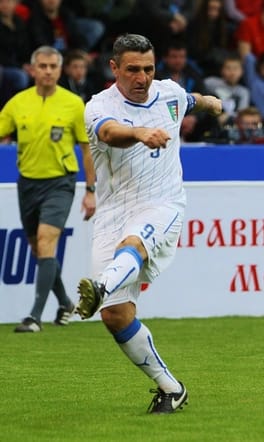
Photo: Дмитрий Садовников / CC BY-SA 3.0 (source: Wikimedia Commons)
Born on August 13, 1956, Bruno Giordano is from Rome, Province of Rome, Italy. Bruno Giordano is listed as an association football player and association football coach. That works out to 70 years old in 2026. The listed height is 175 cm.
My Take
Bruno Giordano belongs to an era of Italian football I find deeply romantic. A Roman through and through, he became a Serie A top scorer with Lazio, the club of his home city, which is the kind of storyline supporters dream about. Then he linked up at Napoli during a golden stretch, and any forward whose name surfaces around that Naples chapter earns my attention. Standing 175 cm, he wasn't physically imposing, so his goals came from instinct and intelligence. He later moved into management. To me he represents the craftsman striker, more cunning than spectacular, the type modern football increasingly overlooks.
This take was written by generative AI, one per person, from publicly reported facts (editorial policy). It is a reading of the record, not reporting.
1. Profile
- Name (English)
- Bruno Giordano
- Name (Japanese)
- ブルーノ・ジョルダーノ
- Reading
- ぶるーの・じょるだーの
- Born
- August 13, 1956 (age 70)
- Origin
- Rome, Province of Rome, Italy
- Height
- 175 cm
- Occupation
- association football player / association football coach
- Zodiac / Chinese zodiac
- Leo / Monkey
2. Links
3. About this entry
Tags
- Last updated
Facts are limited to publicly available information up to 2024; non-public or unconfirmed items are omitted. English text is machine-assisted (facts translated by Sonnet, "My Take" written by Opus 4.8). The Japanese page is the source of record.
Frequently asked questions
When was Bruno Giordano born?
Born August 13, 1956 (age 70).
Where is Bruno Giordano from?
Bruno Giordano is from Rome, Province of Rome, Italy.
What does Bruno Giordano do?
Bruno Giordano works as association football player, association football coach.
How tall is Bruno Giordano?
Bruno Giordano is 175 cm.
Association football player — see all → · Association football coach — see all → · More people from Italy →