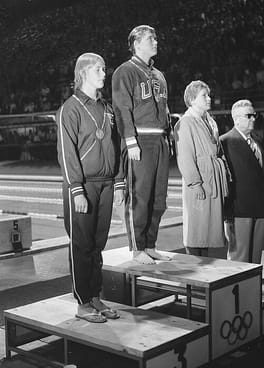
Photo: Harry Pot for Anefo / CC0 (source: Wikimedia Commons)
Carolyn Schuler was born on January 5, 1943 in San Francisco, California, United States. Public records list Carolyn Schuler as a swimmer. Death is recorded on July 22, 2024, at the age of 81. Schooling on record includes Miramonte High School. Awards on record include International Swimming Hall of Fame.
My Take
What draws me to Carolyn Schuler is the arc of her story, not just the medals. She started swimming at thirteen and wasn't pegged as a standout, yet by 1960 she stood atop the Rome podium twice and held a world record. That trajectory, from overlooked to Olympic champion, says more about temperament than talent to me. I have a soft spot for late bloomers who earn their place through patience rather than early hype, and her Hall of Fame induction feels less like a reward and more like overdue recognition. A quietly inspiring figure I'm glad to have on this list.
This take was written by generative AI, one per person, from publicly reported facts (editorial policy). It is a reading of the record, not reporting.
1. Profile
- Name (English)
- Carolyn Schuler
- Name (Japanese)
- キャロリン・シューラー
- Reading
- きゃろりん・しゅーらー
- Born
- January 5, 1943 – July 22, 2024
- Origin
- San Francisco, California, United States
- Height
- 168 cm
- Occupation
- swimmer
- Zodiac / Chinese zodiac
- Capricorn / Goat
2. Background
- High school
- Miramonte High School
Awards & achievements
- International Swimming Hall of Fame
3. Links
4. About this entry
Tags
- Last updated
Facts are limited to publicly available information up to 2024; non-public or unconfirmed items are omitted. English text is machine-assisted (facts translated by Sonnet, "My Take" written by Opus 4.8). The Japanese page is the source of record.
Frequently asked questions
When was Carolyn Schuler born?
Born January 5, 1943.
When did Carolyn Schuler die?
Died July 22, 2024, aged 81.
Where was Carolyn Schuler from?
Carolyn Schuler was from San Francisco, California, United States.
What did Carolyn Schuler do?
Carolyn Schuler worked as swimmer.
How tall was Carolyn Schuler?
Carolyn Schuler was 168 cm.