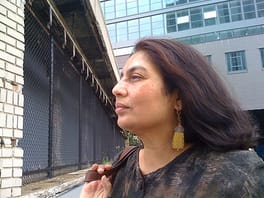
Photo: Unknown author / CC0 (source: Wikimedia Commons)
Public records list Chandra Talpade Mohanty as a sociologist, university teacher and feminist. Chandra Talpade Mohanty studied at University of Illinois Urbana-Champaign.
My Take
Chandra Talpade Mohanty is one of those figures whose influence is quietly enormous. Born in Mumbai and now a distinguished professor at Syracuse, she built a transnational feminist framework that insists we stop flattening 'women everywhere' into one story. I find that corrective genuinely important; context and place matter, and she spent decades arguing it rigorously. There's a stubborn intellectual patience here that I admire. Scholars rarely get the spotlight of actors or athletes, but reshaping how an entire field sees the world is its own kind of fame. I hold a quiet, lasting respect for her work.
This take was written by generative AI, one per person, from publicly reported facts (editorial policy). It is a reading of the record, not reporting.
1. Profile
- Name (English)
- Chandra Talpade Mohanty
- Name (Japanese)
- チャンドラー・タルパデー・モーハンティー
- Reading
- ちゃんどらー・たるぱでー・もーはんてぃー
- Born
- 1955
- Origin
- Mumbai, Bombay State, India
- Occupation
- sociologist / university teacher / feminist
- Zodiac / Chinese zodiac
- Goat
2. Background
- University
- University of Illinois Urbana-Champaign
3. Links
- Wikipedia (English)https://en.wikipedia.org/wiki/Chandra%20Talpade%20Mohanty
- Wikipedia (Japanese)https://ja.wikipedia.org/wiki/%E3%83%81%E3%83%A3%E3%83%B3%E3%83%89%E3%83%A9%E3%83%BC%E3%83%BB%E3%82%BF%E3%83%AB%E3%83%91%E3%83%87%E3%83%BC%E3%83%BB%E3%83%A2%E3%83%BC%E3%83%8F%E3%83%B3%E3%83%86%E3%82%A3%E3%83%BC
- Wikidatahttps://www.wikidata.org/wiki/Q1086920
4. About this entry
Tags
- Last updated
Facts are limited to publicly available information up to 2024; non-public or unconfirmed items are omitted. English text is machine-assisted (facts translated by Sonnet, "My Take" written by Opus 4.8). The Japanese page is the source of record.
Frequently asked questions
Where is Chandra Talpade Mohanty from?
Chandra Talpade Mohanty is from Mumbai, Bombay State, India.
What does Chandra Talpade Mohanty do?
Chandra Talpade Mohanty works as sociologist, university teacher, feminist.
Sociologist — see all → · University teacher — see all → · More people from India →