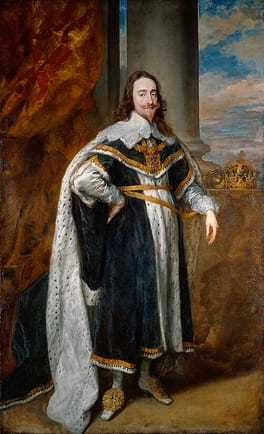
Photo: Anthony van Dyck / Public domain (source: Wikimedia Commons)
Born on November 19, 1600 in Dunfermline Palace, United Kingdom, Charles I of England was a politician, art collector and monarch. Charles I of England died on January 30, 1649, aged 48. Recorded honors include Knight of the Garter.
My Take
Charles I interests me less as a king than as a cautionary tale about certainty. His unshakable belief in his own authority collided with a Parliament that would not bend, and the collision cost him his head. Yet I cannot dismiss him: as an art collector he had perhaps the finest eye of any English monarch, assembling one of the great picture collections of his age. I keep imagining the alternate life in which he was born a connoisseur rather than a sovereign. History judged him a failed ruler, but the aesthetic legacy he left behind quietly outlasted the politics that destroyed him.
This take was written by generative AI, one per person, from publicly reported facts (editorial policy). It is a reading of the record, not reporting.
1. Profile
- Name (English)
- Charles I of England
- Name (Japanese)
- チャールズ1世 (イングランド王)
- Reading
- ちゃーるず1世
- Born
- November 19, 1600 – January 30, 1649
- Origin
- Dunfermline Palace, United Kingdom
- Occupation
- politician / art collector / monarch
- Zodiac / Chinese zodiac
- Scorpio / Rat
2. Background
Awards & achievements
- Knight of the Garter
3. Links
4. About this entry
Tags
- Last updated
Facts are limited to publicly available information up to 2024; non-public or unconfirmed items are omitted. English text is machine-assisted (facts translated by Sonnet, "My Take" written by Opus 4.8). The Japanese page is the source of record.
Frequently asked questions
When was Charles I of England born?
Born November 19, 1600.
When did Charles I of England die?
Died January 30, 1649, aged 48.
Where was Charles I of England from?
Charles I of England was from Dunfermline Palace, United Kingdom.
What did Charles I of England do?
Charles I of England worked as politician, art collector, monarch.
Politician — see all → · Art collector — see all → · More people from the United Kingdom →