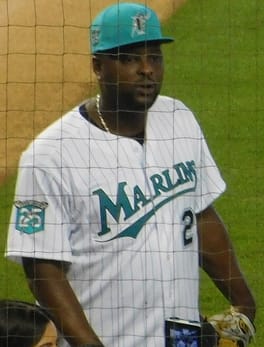
Photo: Adam Moss from East Amherst, New York, United States / CC BY-SA 2.0 (source: Wikimedia Commons)
Charles Johnson is a baseball player, born on July 20, 1971 in Fort Pierce, Florida, United States. That puts Charles Johnson at 55 years old in 2026. Schooling on record includes Fort Pierce Westwood High School and University of Miami. Awards on record include Rawlings Gold Glove Award.
My Take
What strikes me about Charles Johnson is how the defense-first catcher tends to get undersold in baseball memory. A Gold Glove behind the plate is its own kind of stardom, even if it never lights up a highlight reel the way a home run does. I find his career arc telling too: he came up with the Florida Marlins, won there, then bounced through the Dodgers, Orioles, White Sox, Rockies and Devil Rays. That much movement for a respected catcher reads to me less like decline and more like proof that a steady, trusted glove always finds work. A University of Miami product who quietly mastered the unglamorous craft.
This take was written by generative AI, one per person, from publicly reported facts (editorial policy). It is a reading of the record, not reporting.
1. Profile
- Name (English)
- Charles Johnson
- Name (Japanese)
- チャールズ・ジョンソン
- Reading
- ちゃーるず・じょんそん
- Born
- July 20, 1971 (age 55)
- Origin
- Fort Pierce, Florida, United States
- Occupation
- baseball player
- Zodiac / Chinese zodiac
- Cancer / Boar
2. Background
- High school
- Fort Pierce Westwood High School
- University
- University of Miami
Awards & achievements
- Rawlings Gold Glove Award
3. Links
4. About this entry
Tags
- Last updated
Facts are limited to publicly available information up to 2024; non-public or unconfirmed items are omitted. English text is machine-assisted (facts translated by Sonnet, "My Take" written by Opus 4.8). The Japanese page is the source of record.
Frequently asked questions
When was Charles Johnson born?
Born July 20, 1971 (age 55).
Where is Charles Johnson from?
Charles Johnson is from Fort Pierce, Florida, United States.
What does Charles Johnson do?
Charles Johnson works as baseball player.
Baseball player — see all → · More people from the United States →