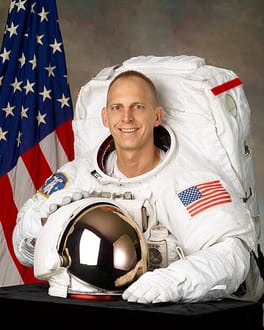
Photo: NASA / Public domain (source: Wikimedia Commons)
Clayton Anderson, born on February 23, 1959 in Omaha, Nebraska, United States, is a military flight engineer, astronaut and radio operator. Clayton Anderson is 67 years old as of 2026. Education on record includes Iowa State University. Recorded honors include Medal "For Merit in Space Exploration".
My Take
What stays with me about Clayton Anderson is the trajectory from Omaha to orbit, earned through engineering rather than glamour. Reaching the ISS on Expedition 15 is remarkable enough, but I find his second act even more telling: returning to teach at his alma mater, Iowa State, and later steering the Strategic Air Command and Aerospace Museum. That is someone determined to hand his experience down rather than coast on it. His active presence as Astro_Clay rounds out the picture of a grounded explorer who never lost the urge to share the view. I respect that quiet, generous kind of ambition far more than spectacle.
This take was written by generative AI, one per person, from publicly reported facts (editorial policy). It is a reading of the record, not reporting.
1. Profile
- Name (English)
- Clayton Anderson
- Name (Japanese)
- クレイトン・アンダーソン
- Reading
- くれいとん・あんだーそん
- Born
- February 23, 1959 (age 67)
- Origin
- Omaha, Nebraska, United States
- Occupation
- military flight engineer / astronaut / engineer / radio operator / aerospace engineer
- Zodiac / Chinese zodiac
- Pisces / Boar
2. Background
- University
- Iowa State University
Awards & achievements
- Medal "For Merit in Space Exploration"
3. Links
4. About this entry
Tags
- Last updated
Facts are limited to publicly available information up to 2024; non-public or unconfirmed items are omitted. English text is machine-assisted (facts translated by Sonnet, "My Take" written by Opus 4.8). The Japanese page is the source of record.
Frequently asked questions
When was Clayton Anderson born?
Born February 23, 1959 (age 67).
Where is Clayton Anderson from?
Clayton Anderson is from Omaha, Nebraska, United States.
What does Clayton Anderson do?
Clayton Anderson works as military flight engineer, astronaut, engineer, radio operator, aerospace engineer.
Military flight engineer — see all → · Astronaut — see all → · More people from the United States →