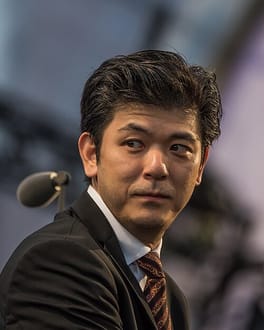
Photo: A.Savin / FAL (source: Wikimedia Commons)
Daishin Kashimoto was born on March 27, 1979 in London, United Kingdom. Daishin Kashimoto is a violinist, concertmaster and musician. The age as of 2026 is 47.
My Take
Daishin Kashimoto is one of those musicians who makes you reconsider what "prodigy" even means — born in London to Japanese parents, he grew up absorbing multiple cultures and languages, and you can honestly hear that cosmopolitan depth in his playing. Landing the first concertmaster chair of the Berlin Philharmonic in 2009, at just 30, is the kind of appointment that defines a generation: that orchestra does not hand out that seat lightly, and he has held it with real authority ever since. His tone is warm but never sentimental, his intonation immaculate, and there is a quiet charisma to his leadership that suits the Berlin Philharmonic's collective ethos perfectly. Fluent in Japanese, English, and German, he genuinely belongs to the world — not just the classical music circuit — and I find that breadth of identity shows up in the nuance of his interpretations. A violinist for serious listeners.
This take was written by generative AI, one per person, from publicly reported facts (editorial policy). It is a reading of the record, not reporting.
1. Profile
- Name (English)
- Daishin Kashimoto
- Name (Japanese)
- 樫本大進
- Reading
- かしもと・だいしん
- Born
- March 27, 1979 (age 47)
- Origin
- London, United Kingdom
- Occupation
- violinist / concertmaster / musician
- Zodiac / Chinese zodiac
- Aries / Goat
2. Links
- Wikipedia (English)https://en.wikipedia.org/wiki/Daishin%20Kashimoto
- Wikipedia (Japanese)https://ja.wikipedia.org/wiki/%E6%A8%AB%E6%9C%AC%E5%A4%A7%E9%80%B2
- Wikidatahttps://www.wikidata.org/wiki/Q3012168
3. About this entry
Tags
- Last updated
Only publicly available facts are listed; non-public or unconfirmed items are omitted. Base data was compiled from Wikidata from June 2026 onward; ages are recalculated daily and deaths are checked against Wikidata on an ongoing basis. English text is machine-assisted (facts translated by Sonnet, "My Take" written by Opus 4.8). The Japanese page is the source of record.
Frequently asked questions
When was Daishin Kashimoto born?
Daishin Kashimoto was born on March 27, 1979 and is 47 years old.
Where is Daishin Kashimoto from?
Daishin Kashimoto is from London, United Kingdom.
What does Daishin Kashimoto do?
Daishin Kashimoto works as violinist, concertmaster, musician.
Violinist — see all → · More people from the United Kingdom → · More people born on March 27 →