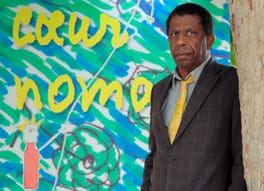
Photo: CamiRobi / CC BY-SA 4.0 (source: Wikimedia Commons)
Dany Laferrière was born on April 13, 1953 in Port-au-Prince, Ouest, Haiti. Dany Laferrière is a poet, novelist and filmmaker. That works out to 73 years old in 2026. Listed accolades include Commander of the Legion of Honour, Commandeur des Arts et des Lettres, Prix Carbet de la Caraïbe et du Tout-Monde (1991) and 4 more.
My Take
What moves me about Laferrière is not the trophy case, impressive as it is, but the trajectory: a man who left a turbulent Haiti and built his literary home in another language, shuttling between Montreal and Paris until he earned a chair at the Académie française. That is an outsider's victory won on the establishment's own terms. I admire that he refused to be just a novelist, working as poet, filmmaker and journalist alike. Writers who turn exile and memory into art without bitterness are rare, and his refusal to be boxed into one form reads to me as a kind of generosity.
This take was written by generative AI, one per person, from publicly reported facts (editorial policy). It is a reading of the record, not reporting.
1. Profile
- Name (English)
- Dany Laferrière
- Name (Japanese)
- ダニー・ラフェリエール
- Reading
- だにー・らふぇりえーる
- Born
- April 13, 1953 (age 73)
- Origin
- Port-au-Prince, Ouest, Haiti
- Occupation
- poet / novelist / filmmaker / journalist / writer
- Zodiac / Chinese zodiac
- Aries / Snake
2. Background
Awards & achievements
- Commander of the Legion of Honour
- Commandeur des Arts et des Lettres
- 1991 Prix Carbet de la Caraïbe et du Tout-Monde
- 2002 Prix RFO du livre
- 2006 Governor General's Award for French-language children's literature
- 2009 Prix Médicis
- 2010 Grand Prix Metropolis bleu
3. Links
- Official sitehttps://danylaferriere.com
- Wikipedia (English)https://en.wikipedia.org/wiki/Dany%20Laferri%C3%A8re
- Wikipedia (Japanese)https://ja.wikipedia.org/wiki/%E3%83%80%E3%83%8B%E3%83%BC%E3%83%BB%E3%83%A9%E3%83%95%E3%82%A7%E3%83%AA%E3%82%A8%E3%83%BC%E3%83%AB
- Wikidatahttps://www.wikidata.org/wiki/Q1165217
4. About this entry
Tags
- Last updated
Facts are limited to publicly available information up to 2024; non-public or unconfirmed items are omitted. English text is machine-assisted (facts translated by Sonnet, "My Take" written by Opus 4.8). The Japanese page is the source of record.
Frequently asked questions
When was Dany Laferrière born?
Born April 13, 1953 (age 73).
Where is Dany Laferrière from?
Dany Laferrière is from Port-au-Prince, Ouest, Haiti.
What does Dany Laferrière do?
Dany Laferrière works as poet, novelist, filmmaker, journalist, writer.
Poet — see all → · Novelist — see all → · More people from Haiti →