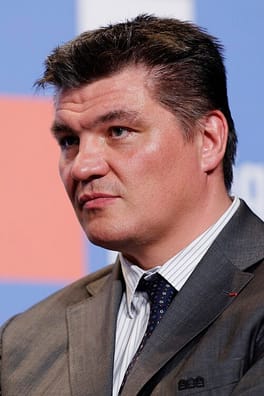
Photo: Marie-Lan Nguyen / CC BY 3.0 (source: Wikimedia Commons)
David Douillet is credited as a politician, judoka and minister. Born on February 17, 1969, David Douillet is from Rouen, Seine-Maritime, France. That works out to 57 years old in 2026. Awards on record include Knight of the Legion of Honour, L'Équipe Champion of Champions (2000) and Silver Olympic Order (2001). The listed height is 196 cm.
My Take
David Douillet is a fascinating example of an athlete who reinvented himself entirely. As a judoka he was a giant of the heavyweight division, taking back-to-back Olympic golds in 1996 and 2000 plus four world titles, which puts him among the greatest the sport has produced. What intrigues me more is the second act: he moved into French politics and even served as a minister. That pivot from the mat to government is rare and rarely smooth, and I respect anyone who attempts it. His Legion of Honour and Silver Olympic Order mark a life of unusual breadth. Few champions trade one demanding arena for another like he did.
This take was written by generative AI, one per person, from publicly reported facts (editorial policy). It is a reading of the record, not reporting.
1. Profile
- Name (English)
- David Douillet
- Name (Japanese)
- ダビド・ドゥイエ
- Reading
- だびど・どぅいえ
- Born
- February 17, 1969 (age 57)
- Origin
- Rouen, Seine-Maritime, France
- Height
- 196 cm
- Occupation
- politician / judoka / minister
- Zodiac / Chinese zodiac
- Aquarius / Rooster
2. Background
Awards & achievements
- Knight of the Legion of Honour
- 2000 L'Équipe Champion of Champions
- 2001 Silver Olympic Order
3. Links
- Instagramhttps://www.instagram.com/daviddouilletofficiel/
- Xhttps://x.com/ddouillet
- Wikipedia (English)https://en.wikipedia.org/wiki/David%20Douillet
- Wikipedia (Japanese)https://ja.wikipedia.org/wiki/%E3%83%80%E3%83%93%E3%83%89%E3%83%BB%E3%83%89%E3%82%A5%E3%82%A4%E3%82%A8
- Wikidatahttps://www.wikidata.org/wiki/Q725694
4. About this entry
Tags
- Last updated
Facts are limited to publicly available information up to 2024; non-public or unconfirmed items are omitted. English text is machine-assisted (facts translated by Sonnet, "My Take" written by Opus 4.8). The Japanese page is the source of record.
Frequently asked questions
When was David Douillet born?
Born February 17, 1969 (age 57).
Where is David Douillet from?
David Douillet is from Rouen, Seine-Maritime, France.
What does David Douillet do?
David Douillet works as politician, judoka, minister.
How tall is David Douillet?
David Douillet is 196 cm.
Politician — see all → · Judoka — see all → · More people from France →