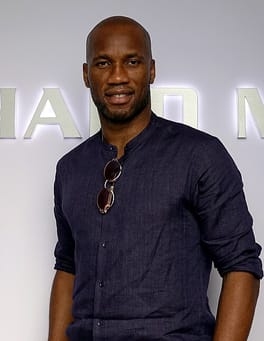
Photo: Y.Leclercq© / CC BY-SA 4.0 (source: Wikimedia Commons)
Public records list Didier Drogba as an association football player and peace makers. Born on March 11, 1978, Didier Drogba is from Abidjan, Abidjan Department, Ivory Coast. The age as of 2026 is 48. Awards on record include UEFA President's Award (2020), African Footballer of the Year (2006), Premier League Golden Boot (2007) and 2 more. The listed height is 189 cm.
My Take
For me, calling Didier Drogba a striker undersells him. The towering Abidjan-born forward was Chelsea's man for the biggest occasions, but what truly earns my respect happened off the pitch. When the Ivory Coast was torn by civil conflict, his voice reportedly helped nudge the country toward peace, proof that a footballer can move more than a scoreline. African Footballer of the Year, a Golden Boot, Hall of Fame honours: the trophies are real, yet his legacy as a peacemaker is what lasts. I rate him as a rare athlete whose character outshone even his goal tally.
This take was written by generative AI, one per person, from publicly reported facts (editorial policy). It is a reading of the record, not reporting.
1. Profile
- Name (English)
- Didier Drogba
- Name (Japanese)
- ディディエ・ドログバ
- Reading
- でぃでぃえ・どろぐば
- Born
- March 11, 1978 (age 48)
- Origin
- Abidjan, Abidjan Department, Ivory Coast
- Height
- 189 cm
- Occupation
- association football player / peace makers
- Zodiac / Chinese zodiac
- Pisces / Horse
2. Background
Awards & achievements
- 2020 UEFA President's Award
- 2006 African Footballer of the Year
- 2007 Premier League Golden Boot
- 2013 Golden Foot
- 2022 Premier League Hall of Fame
3. Links
- Official sitehttps://www.didierdrogba.com
- Instagramhttps://www.instagram.com/didierdrogba/
- Xhttps://x.com/didierdrogba
- Wikipedia (English)https://en.wikipedia.org/wiki/Didier%20Drogba
- Wikipedia (Japanese)https://ja.wikipedia.org/wiki/%E3%83%87%E3%82%A3%E3%83%87%E3%82%A3%E3%82%A8%E3%83%BB%E3%83%89%E3%83%AD%E3%82%B0%E3%83%90
- Wikidatahttps://www.wikidata.org/wiki/Q48892
4. About this entry
Tags
- Last updated
Facts are limited to publicly available information up to 2024; non-public or unconfirmed items are omitted. English text is machine-assisted (facts translated by Sonnet, "My Take" written by Opus 4.8). The Japanese page is the source of record.
Frequently asked questions
When was Didier Drogba born?
Born March 11, 1978 (age 48).
Where is Didier Drogba from?
Didier Drogba is from Abidjan, Abidjan Department, Ivory Coast.
What does Didier Drogba do?
Didier Drogba works as association football player, peace makers.
How tall is Didier Drogba?
Didier Drogba is 189 cm.
Association football player — see all → · More people from Ivory Coast →