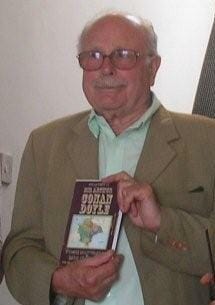
Photo: Paul_Spiring_in_2008.jpeg: Original uploader was Prspiring at en.wikipedia / CC BY-SA 3.0 (source: Wikimedia Commons)
Edward Hardwicke was credited as a military officer, stage actor and film actor. Edward Hardwicke was born in London, United Kingdom on August 7, 1932. Death is recorded on May 16, 2011, at the age of 78.
My Take
Edward Hardwicke is one of those actors who slipped into a role so naturally that it's hard to imagine anyone else in it. As Dr. Watson opposite Jeremy Brett in Granada Television's Sherlock Holmes, he brought a warmth, dignity, and quiet intelligence to a character that had spent decades being played as comic relief — and he completely demolished that cliché. His Watson was a real partner, a man of substance, and you genuinely believed these two had history together. Before Holmes he'd already made his mark in Colditz, which says a lot about his range. Born into a theatrical family — his father Cedric Hardwicke was a legend in his own right — he carried that pedigree without ever coasting on it. He passed away in 2011, and I still think the Holmes fandom hasn't properly grieved him enough.
This take was written by generative AI, one per person, from publicly reported facts (editorial policy). It is a reading of the record, not reporting.
1. Profile
- Name (English)
- Edward Hardwicke
- Name (Japanese)
- エドワード・ハードウィック
- Reading
- えどわーど・はーどうぃっく
- Born
- August 7, 1932 – May 16, 2011
- Origin
- London, United Kingdom
- Occupation
- actor / military officer / stage actor / film actor / television actor
- Zodiac / Chinese zodiac
- Leo / Monkey
2. Links
3. About this entry
Tags
- Last updated
Facts are limited to publicly available information up to 2024; non-public or unconfirmed items are omitted. English text is machine-assisted (facts translated by Sonnet, "My Take" written by Opus 4.8). The Japanese page is the source of record.
Frequently asked questions
When was Edward Hardwicke born?
Born August 7, 1932.
When did Edward Hardwicke die?
Died May 16, 2011, aged 78.
Where was Edward Hardwicke from?
Edward Hardwicke was from London, United Kingdom.
What did Edward Hardwicke do?
Edward Hardwicke worked as actor, military officer, stage actor, film actor, television actor.
Actor — see all → · Military officer — see all → · More people from the United Kingdom →