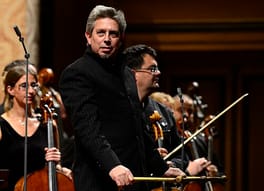
Photo: Ezra Johnson / CC BY-SA 4.0 (source: Wikimedia Commons)
Born on May 2, 1954 in Brooklyn, New York, United States, Elliot Goldenthal is a lyricist, songwriter and film score composer. Elliot Goldenthal is 72 years old as of 2026. Schooling on record includes Andries Hudde Junior High School. Recorded honors include Academy Award for Best Original Score (2003), Golden Globe Award for Best Original Score (2002) and Richard Rodgers Awards for Musical Theatre.
My Take
Elliot Goldenthal is a composer I return to because he treats genre boundaries as something to dissolve. Born in Brooklyn in 1954, trained under John Corigliano and mentored by Aaron Copland, he carries the bloodline of American concert music yet pours it into film and theatre scores, winning the 2003 Academy Award for Frida. What I value most is not the trophy count but the visceral chill his music delivers, the way he scores pain and shadow without flinching. He blends classical, theatrical and cinematic instincts into something that refuses to sit neatly in any box, and that restless inventiveness is exactly why he matters to me.
This take was written by generative AI, one per person, from publicly reported facts (editorial policy). It is a reading of the record, not reporting.
1. Profile
- Name (English)
- Elliot Goldenthal
- Name (Japanese)
- エリオット・ゴールデンサール
- Reading
- えりおっと・ごーるでんさーる
- Born
- May 2, 1954 (age 72)
- Origin
- Brooklyn, New York, United States
- Occupation
- composer / lyricist / songwriter / film score composer / musician
- Zodiac / Chinese zodiac
- Taurus / Horse
2. Background
- High school
- Andries Hudde Junior High School
Awards & achievements
- 2003 Academy Award for Best Original Score
- 2002 Golden Globe Award for Best Original Score
- Richard Rodgers Awards for Musical Theatre
3. Links
- Official sitehttps://elliotgoldenthal.com
- Wikipedia (English)https://en.wikipedia.org/wiki/Elliot%20Goldenthal
- Wikipedia (Japanese)https://ja.wikipedia.org/wiki/%E3%82%A8%E3%83%AA%E3%82%AA%E3%83%83%E3%83%88%E3%83%BB%E3%82%B4%E3%83%BC%E3%83%AB%E3%83%87%E3%83%B3%E3%82%B5%E3%83%BC%E3%83%AB
- Wikidatahttps://www.wikidata.org/wiki/Q264565
4. About this entry
Tags
- Last updated
Facts are limited to publicly available information up to 2024; non-public or unconfirmed items are omitted. English text is machine-assisted (facts translated by Sonnet, "My Take" written by Opus 4.8). The Japanese page is the source of record.
Frequently asked questions
When was Elliot Goldenthal born?
Born May 2, 1954 (age 72).
Where is Elliot Goldenthal from?
Elliot Goldenthal is from Brooklyn, New York, United States.
What does Elliot Goldenthal do?
Elliot Goldenthal works as composer, lyricist, songwriter, film score composer, musician.
Composer — see all → · Lyricist — see all → · More people from the United States →