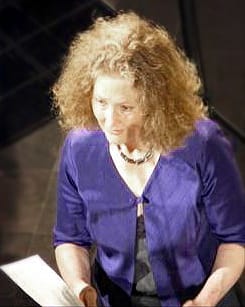
Photo: Jeanlagoutte at French Wikipedia. / CC BY-SA 1.0 (source: Wikimedia Commons)
Emma Kirkby was born in Camberley, United Kingdom on February 26, 1949. Public records list Emma Kirkby as an opera singer. The age as of 2026 is 77. Education on record includes Somerville College. Listed accolades include Dame Commander of the Order of the British Empire, honorary doctor of the University of Bath (1994), Handel Prize (1997) and 1 more.
My Take
Emma Kirkby is, to me, the quiet aristocrat of early music. She never chased fashion; instead she built a career on purity of tone and scholarly devotion, and the world eventually came to her. More than 100 recordings, a damehood, the Handel Prize, the Queen's Medal for Music, and yet almost nothing public about her private life. That restraint feels intentional and dignified. I admire artists who let the work speak and refuse to perform their personality. Her soprano became a kind of standard for how Baroque song should breathe. For me she represents excellence without ego, and that is rare and worth honoring.
This take was written by generative AI, one per person, from publicly reported facts (editorial policy). It is a reading of the record, not reporting.
1. Profile
- Name (English)
- Emma Kirkby
- Name (Japanese)
- エマ・カークビー
- Reading
- えま・かーくびー
- Born
- February 26, 1949 (age 77)
- Origin
- Camberley, United Kingdom
- Occupation
- opera singer
- Zodiac / Chinese zodiac
- Pisces / Ox
2. Background
- University
- Somerville College
Awards & achievements
- Dame Commander of the Order of the British Empire
- 1994 honorary doctor of the University of Bath
- 1997 Handel Prize
- 2010 The Queen's Medal for Music
3. Links
- Official sitehttp://www.emmakirkby.com
- Wikipedia (English)https://en.wikipedia.org/wiki/Emma%20Kirkby
- Wikipedia (Japanese)https://ja.wikipedia.org/wiki/%E3%82%A8%E3%83%9E%E3%83%BB%E3%82%AB%E3%83%BC%E3%82%AF%E3%83%93%E3%83%BC
- Wikidatahttps://www.wikidata.org/wiki/Q242430
4. About this entry
Tags
- Last updated
Facts are limited to publicly available information up to 2024; non-public or unconfirmed items are omitted. English text is machine-assisted (facts translated by Sonnet, "My Take" written by Opus 4.8). The Japanese page is the source of record.
Frequently asked questions
When was Emma Kirkby born?
Born February 26, 1949 (age 77).
Where is Emma Kirkby from?
Emma Kirkby is from Camberley, United Kingdom.
What does Emma Kirkby do?
Emma Kirkby works as opera singer.
Opera singer — see all → · More people from the United Kingdom →