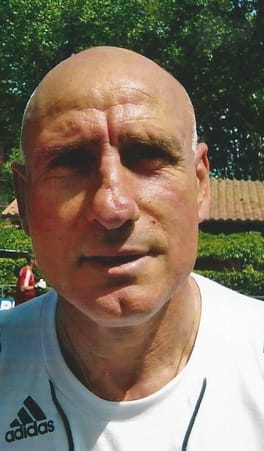
Photo: Christophe95 / CC BY-SA 3.0 (source: Wikimedia Commons)
Francesco Graziani is listed as an association football player and association football coach. Born on December 16, 1952, Francesco Graziani is from Subiaco, Province of Rome, Italy. That works out to 73 years old in 2026. Listed accolades include Gold Collar for Sports Merit. The listed height is 180 cm.
My Take
I have a soft spot for strikers like Francesco "Ciccio" Graziani, the kind who define an era at one club. Eight years at Torino, a Serie A title in 1976 and the Capocannoniere crown the year after - that is a forward who lived for the goal and earned the affection of a city. What I find more telling is that he stayed in the game as a coach afterward. Players who reach the top and then choose to teach reveal where their love really lies. The nickname Ciccio and his own personal website suggest a man at ease with his own history, and I respect that warmth.
This take was written by generative AI, one per person, from publicly reported facts (editorial policy). It is a reading of the record, not reporting.
1. Profile
- Name (English)
- Francesco Graziani
- Name (Japanese)
- フランチェスコ・グラツィアーニ
- Reading
- ふらんちぇすこ・ぐらつぃあーに
- Born
- December 16, 1952 (age 73)
- Origin
- Subiaco, Province of Rome, Italy
- Height
- 180 cm
- Occupation
- association football player / association football coach
- Zodiac / Chinese zodiac
- Sagittarius / Dragon
2. Background
Awards & achievements
- Gold Collar for Sports Merit
3. Links
- Official sitehttps://www.cicciograziani.com/
- Wikipedia (English)https://en.wikipedia.org/wiki/Francesco%20Graziani
- Wikipedia (Japanese)https://ja.wikipedia.org/wiki/%E3%83%95%E3%83%A9%E3%83%B3%E3%83%81%E3%82%A7%E3%82%B9%E3%82%B3%E3%83%BB%E3%82%B0%E3%83%A9%E3%83%84%E3%82%A3%E3%82%A2%E3%83%BC%E3%83%8B
- Wikidatahttps://www.wikidata.org/wiki/Q355897
4. About this entry
Tags
- Last updated
Facts are limited to publicly available information up to 2024; non-public or unconfirmed items are omitted. English text is machine-assisted (facts translated by Sonnet, "My Take" written by Opus 4.8). The Japanese page is the source of record.
Frequently asked questions
When was Francesco Graziani born?
Born December 16, 1952 (age 73).
Where is Francesco Graziani from?
Francesco Graziani is from Subiaco, Province of Rome, Italy.
What does Francesco Graziani do?
Francesco Graziani works as association football player, association football coach.
How tall is Francesco Graziani?
Francesco Graziani is 180 cm.
Association football player — see all → · Association football coach — see all → · More people from Italy →